PECULIARLY PETE

  • Home
  • Contact

  • What Happened to Battleships?

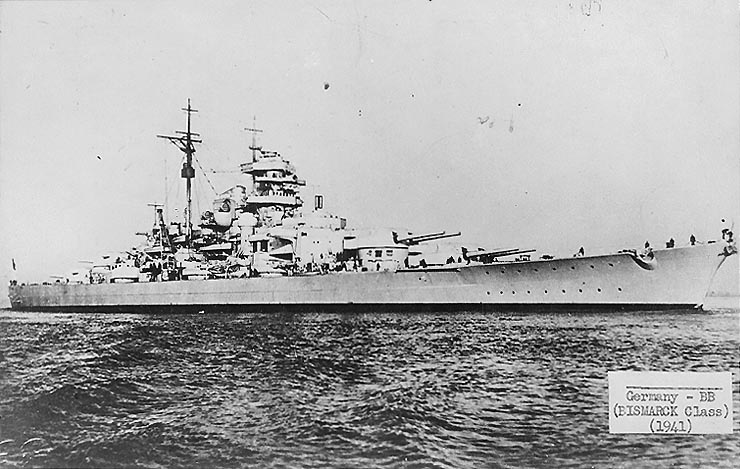
    ship_bismark2

    Battleships played a pivotal role in world history for over 50 years. These hugely expensive ships were symbols of national pride, and were present at (or part of) the greatest moments of war and peace in the first half of the 20th Century. However, fast forward to today, and not a single navy has a working battleship. Why is this?

    Firstly, I should draw a distinction between ‘warship’ and ‘battleship’. A warship is any armed ship which is designed to go to war at sea, so many different types of ship (from small corvettes to heavy cruisers) could be involved in a battle without actually being a battleship. Obviously, today’s navies are full of warships, I’m not going down that route.

    A battleship is instead an extremely heavy warship, featuring large guns and (generally) thick armour. These behemoths of the sea were designed to sink pretty much anything on the waves, bombard shore installations with enormous high explosive shells and generally persuade anyone considering attacking your country that this was a bad idea.

    When I say large guns, I mean really very large indeed. The calibre describes the diameter of the hole in the end of the gun, and for most modern artillery pieces this is about 155 mm, or in old money about 6.1 inches. The battleships used in World War 2 had guns with calibers of 11 inches or greater, with 15 inches being a common size. The barrel of these enormous firearms would be many times this length (typically over 40 times). This enormous size meant that battleships could lob shells weighing several hundred kilograms over ranges in excess of 12 miles.

    These ships could dish it out, but they could take it too. A battleship would typically have a few inches of deck armour and perhaps a little more protecting the conning tower, but the armour would be especially thick along the sides of the ship (the belt armour) which protected vital components such as the boilers and the magazine (ammunition storage). These components would also have internal armour around them, should a shell penetrate the outer hull. Many battleships (particularly in the Second World War) featured anti-torpedo bulges, designed to detonate torpedos before they reached the hull, which reduced the likelihood of flooding.

    I should also mention here the tremendous ‘secondary’ firepower many of these ships possessed. In addition to the enormous main armament, battleships would have a multitude of smaller, but still very large, 4, 5 or even 6 inch guns, sometimes packed into their own turrets, to deal with smaller targets. As aircraft became more of a threat, anti-aircraft armaments also grew, featuring armament all the way from heavy machine guns to 40 mm autocannon. Many of the secondary guns could also be used against aircraft, making these ships formidable targets for almost any opponent.

    So if these ships were so great, why aren’t there any in use today? Well, this is a long story, but if you’re short on time, the brief answer is: aircraft and submarines.

    Aircraft were a factor in the First World War, and by the time of the Second, they were far more capable machines. Aircraft could now carry torpedoes and heavy bombs, and were far faster than anything around in 1918 (except for the Fairey Swordfish, but that’s a story for another day). Even though they bristled with anti-aircraft guns, the fire directors on battleships could struggle to target low flying or fast aircraft, particularly in rough seas.

    Even with adequate anti-torpedo protection, some parts of the ship would always be vulnerable, like rudders and steering gear. Most bombs actually struggled to penetrate the armour of a battleship, but with the development of armour piercing bombs (some very heavy, like the tallboy) this armour was not of much use. Besides, one didn’t even need to penetrate the armour to do damage – the secondary armament was outside this thick armour, and it could still be taken out, and the fire directors, radars and other equipment could be destroyed without ever going through serious armour.

    It became very clear, particularly in the Pacific, that the balance of power now lay with aircraft and aircraft carriers. At Pearl Harbour, the Japanese Imperial Navy’s aircraft sank many US battleships, and conversely, the Japanese battleship Yamato, arguably the most powerful ever built, was sunk entirely by aircraft, with no actual contact between ships being required.

    In addition, though there were relatively few times when battleships were sunk or even damaged by submarines, many other kinds of ship could be sunk easily by submarines. This somewhat defeated the point of many battleships, since they were far more expensive and took far longer to build than submarines.

    Submarines too were getting far more advanced, and could spend longer and longer under the waves. Though they were a great deal slower than battleships, and indeed warships in general, they could lay in wait for a ship, and sink it with torpedoes, often without being detected. In summary – why build a battleship when aircraft can destroy it and cheap submarines can do its job?

    This isn’t quite the end of the story though. The factors discussed above, and post-war austerity, put an end to battleship building, by all nations, after World War 2, but many were retained, because there was one task that battleships were still ideal for – shore bombardment. Remember that battleships had far bigger guns than are available on land, even today, and could cause huge devastation to shore targets, as demonstrated during many of the campaigns during the war, and in the Korean war of the 1950s. Eventually, this role would fall to aircraft, but the battleships remained a useful asset.

    Following the end of the cold war, the last battleships (the US Iowa Class ships) were retired. The USA, keen to stay ahead in military matters, has invested heavily instead in nuclear powered aircraft carriers and nuclear submarines, and the era of the battleship is well and truly over.

     

    June 12, 2018

  • The Importance of Railways in World War 2

    World War 2 was the deadliest war in history, and also perhaps one of the most well documented. Names like El Alamein, Stalingrad, Normandy, Midway and Barbarossa are common knowledge and with good reason – we should not forget the lives lost, and the brilliant (or misguided) military campaigns waged.

    The war saw mechanised violence on an unprecedented scale. Battles featuring hundreds of tanks, armoured vehicles and trucks, or air raids of 1000 or more aircraft were not uncommon, particularly over Germany. These machines all required vast quantities of material. In a 1000 bomber raid, for example, each aircraft might carry anything up to 4 tonnes of bombs, and would need enough fuel to carry those bombs over more than 1000 miles. Getting all this in place was an uphill battle in itself.

    And that would be without mentioning the resources you need to build 1000 bombers, each with 4 engines, which themselves would have several cylinders, hundreds of metres of pipes and miles of cables. The Earth can provide the resources you need, but in order to make them into these marvels of engineering, you first need to get them to a factory.

    Which is where the railways come in. You see, in those days, road transport was very limited in terms of capacity. Lorries carried a few tonnes each, if that, and the road network wasn’t as well-established as it is today. In any case, it would be far more energy efficient for these bulk commodities to be transported by rail, and it still is.

    So great, now the raw materials are at the factories, ready to be made into war machines for your… war machine. But we’re not quite finished yet because these factories need huge quantities of one other thing – manpower. Workers need to get to work, so you also need trains to transport them, particularly in this era when car ownership is far from universal, and besides, you need petrol for the tanks, aircraft and countless other vehicles actually fighting.

    Then the tricky problem of getting war machines to the front line arises, especially when that front line might be hundreds or even thousands of miles away. Using the roads would be far too difficult and costly in fuel, so the only real option was again rail. Thus, the outcome of many campaigns was influenced by the condition of the railways.

    For example, during operation Barbarossa, the Germans in Russia struggled in large part because of supply problems. Not only did huge mileages of railways had to be converted from the wider Russian gauge (the gauge is simply the distance between the rails) but rolling stock had to be found – stock that Germany was already short of. This meant a switch to road haulage, but lorries were also in short supply, so many supplies had to come on horses, which were vulnerable to cold and exhaustion.

    Conversely, during the Normandy campaign, the Allies could count on mammoth quantities of supplies, brought to the armies assembling in southern England by British railways, which were largely intact. On the other side of the lines, the Germans would find it difficult to reinforce their troops as many French railways had been hammered by Allied air forces or sabotaged by the resistance. Ultimately, therefore, an Allied victory was inevitable.

    Frequently, the railways themselves were often in the front lines. Because of their strategic importance (as described above) the railways (particularly junctions, marshalling yards and other large, important installations) were prime targets during the Blitz. Britain’s Railways did a reasonably good job at carrying on during this period, and although services were occasionally suspended, this was not for long; repairs being effected quickly.

    Following this, Allied planners, thinking of how best to cripple Germany, came up with the Transport Plan, a plan to concentrate Allied heavy bombers on the German railway network, to prevent their industry from working effectively. Eventually, it was realised that the Germans also repaired their railways quickly, so this plan was largely replaced with the Oil Plan, which unsurprisingly sought to deprive Germany of oil.

    This is an aspect of total war that is rarely discussed, but perhaps should be more, if we are to understand the war better. If you have any thoughts on this, or perhaps want to suggest something I’ve overlooked, I would as usual love to hear it in the comments.


    June 3, 2018

  • My Thoughts on Cars

    Unlike what I usually write, about a specific machine or issue, this one is going to be much more general. I have over the years had many thoughts about cars, mainly because we in the West are surrounded by them a lot of the time, and they are possibly the transport medium people see most often.

    On the one hand, I absolutely adore cars. Much of the engineering that goes into even the most ordinary car is very clever, particularly as regards modern engine technology, tyres, and aerodynamics. Cars can also be incredibly beautiful machines (though most aren’t) and in this way can act almost as public art.

    I also love a good motor race. I particularly like endurance racing, which is much more of a team event than Formula 1, and can be much more of a test of engineering. It is much more difficult to make a car that will run fast for 24 hours than for 2, and keep the drivers reasonably comfortable for that time. In a 24 hour race, prototypes (cars built specifically for endurance racing) can cover many thousands of kilometres, very quickly, and without changing any of the major components. I think you’ll agree, that is quite the achievement.

    On the other hand, I believe cars aren’t a great way of getting around, for many reasons. In no particular order, these are:

    Space inefficiency. Next time you’re walking next to a busy road, just take a look at how many people are actually in the cars as they’re going by or stuck in traffic. You will quickly realise that most cars have just 1 person in them. 1 person is taking up space that could be quite easily occupied by 5 or more people. This creates no end of traffic problems, and leads on nicely to problem No. 2.

    Resource inefficiency. Again, it takes a lot of energy to make a car, and it is somewhat wasted on 1 person. That’s without mentioning the precious metals in the electronics and so on, and the fuel in the tank, which has to be sourced from rapidly diminishing oil reserves. Cars also are replaced long before they have reached their life, wasting further precious resources in building even more cars.

    Air quality. Cities clogged with cars pumping out noxious fumes do not have great air quality. This leads to many health problems, exacerbates many others, and speaking from personal experience, it certainly makes walking and cycling a lot less pleasant.

    Induced traffic. This is a transport planning problem that is best explained looking at the US, in particular cities like Los Angeles. You see, it is hard to relieve a traffic problem by building more or wider roads. This might sound counterintuitive, but it is reasonably simple to explain. If roads are well known to suffer traffic at particular times, or in general, a certain amount of people will avoid driving on them. If you build a new road, these people, seeing that now there might be less traffic, will drive, and before long, your new road is also clogged with traffic. For example, Los Angeles has lots of large highways, but is always clogged with traffic in the morning and evening peak. Closer to home, the Queensferry crossing across the Firth of Forth was clogged on the day that it opened, almost completely defeating its purpose.

    Expense. In the UK there is a perpetual gripe about the cost of train tickets, which is a topic for another day, but one thing you can’t argue with is that usually you only pay when you actually want to go somewhere (season tickets aside). With a car, you have to pay not only for the car (buying, car finance, etc.), but for servicing (including parts and labour), insurance and road tax (on most cars), before you’ve even turned a wheel. This adds up to several thousand pounds to have a car sitting around, and then you’ve got to add fuel. Oh, and then there’s parking charges, congestion charge, toll roads and so on, something public transport doesn’t have to worry about.

    Safety. Car accidents are sadly not a rare occurrence, and many result in the death or serious injury of the occupants of the car. In fact, in the UK, in the year ending June 2017, 1710 people were killed on the roads, according to the Department for Transport. In case you think I’m fiddling the figures, that was actually a 5% decrease on the year before.

    And that’s before I mention the 27,130 road casualties listed as “killed or seriously injured” in the year ending June 2017. I should mention, a “serious” injury is not just breaking a bone or something of that nature. A “serious” injury is one that is completely life changing, like losing a limb.

    Frankly this is utter carnage. One can imagine if there was a disease that killed or maimed that many people a year, there would be campaigns and races for life and all the rest of it, but for some reason on the roads it is accepted.

    I’m not saying that I think cars should be banned. Far from it, there are many situations, particularly in the rural community, where having a car is essential. What I am saying is that we need to think more carefully about how and why we use cars in cities, or when there is a valid alternative.


    June 1, 2018

  • Perfect is the Enemy of Good Enough: Thompson vs. Sten

    In 1939, the British military had a problem. It did not have a submachine gun, and Britain did not have an industry experienced in producing them. To solve this shortage of capability, they bought a few German MP28s, and decided, rather shamelessly, to produce a copy with which to equip their forces. This was called the Lanchester submachine gun.

    When this was put to the British Army in 1940, they pointed out that they didn’t need this gun, since they had started using the American Thompson submachine gun. And they had a point – the Thompson was a great gun that had been around for years, and was well liked by soldiers.

    Unfortunately, there were a few issues with carrying on with the Thompson. The British Army had (rather heroically) departed Dunkirk, but they had left many of their weapons and almost all of their heavy equipment behind. This would all have to be replaced, and fairly soon, because the Germans were now turning their attention towards the British Isles, and with the Battle of Britain raging in the skies, the possibility of Nazi invasion seemed very real.

    Why not use more Thompsons? Well, there were 2 problems. Firstly, America was across the U-Boat infested Atlantic, which was also watched over by the Luftwaffe and potentially also by German warships. The U-Boat problem would only get worse now that the Germans had bases on the French Atlantic coast, making it even easier to send vital supplies to the bottom. Secondly, Britain would have to buy all of their Thompsons in gold bullion, which was becoming very expensive. It didn’t help that Britain needed this gold to buy other armaments too. Needless to say, they bought all the Thompsons they could, but this could not continue for long.

    Instead, a cheaper, redesigned version of the Lanchester was proposed, the Sten. It was developed incredibly rapidly, and was ready to go into production in the spring of 1941. By August 1941, the Sten mk.2 had replaced the mk.1 in production, such was the speed of development.

    These were not capable guns. They were very inaccurate except at short range, had crude sights and were prone to jams. I don’t know enough about guns to be able to describe all the problems with the Sten, but there were many of them.

    It was, however,  incredibly cheap and quick to produce. A single Sten gun took about 5 man-hours to produce, much less than the Thompson. Factories were able to churn out 500 Stens in a single shift, and to keep doing this around the clock, not just in Britain, but Canada too (the Canadian forces also used the Sten). And what they churned out were guns which, while crude, worked.

    battle_none6
    A female factory worker poses with a finished Sten gun (Library and Archives Canada)

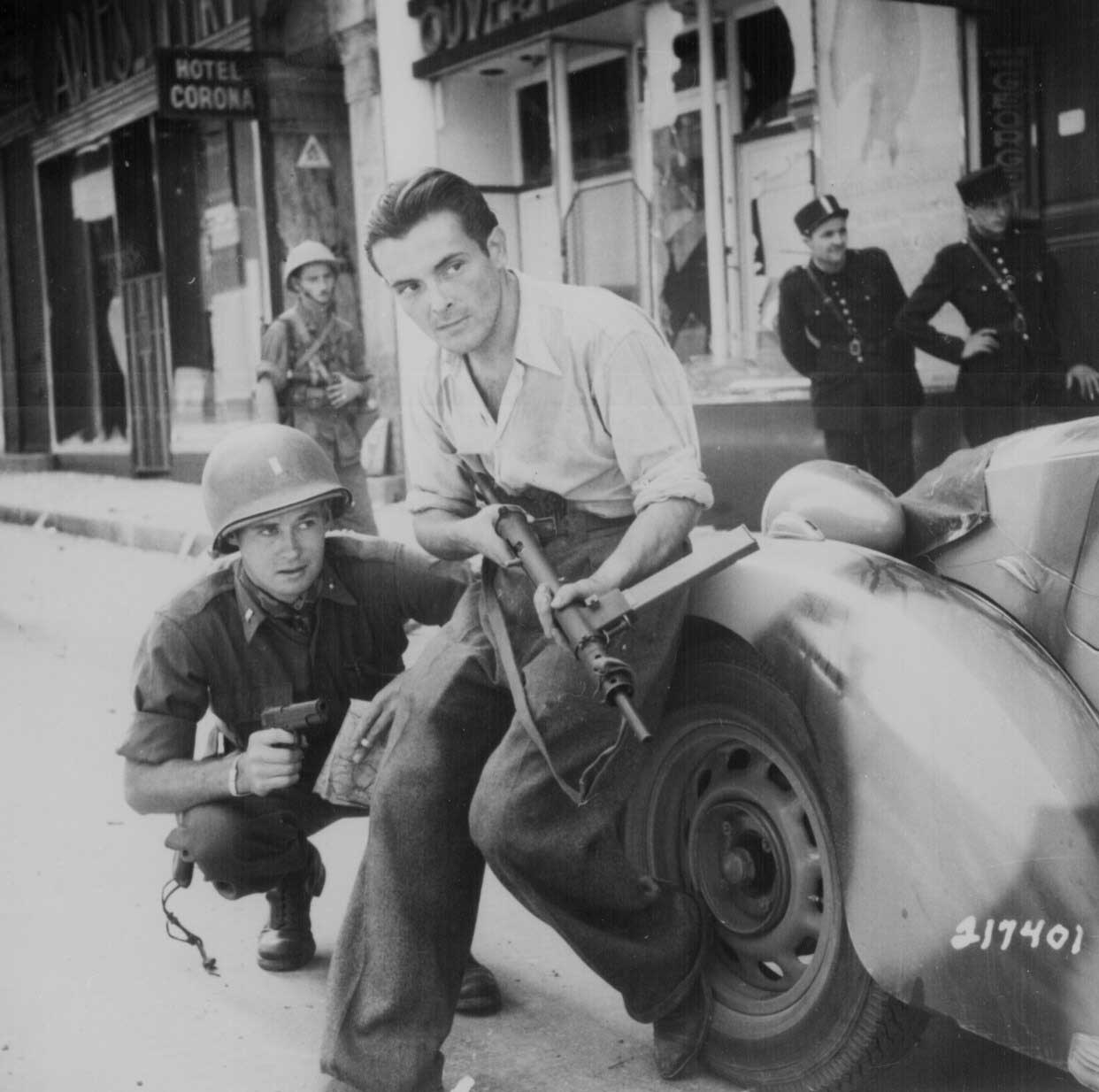
    This made Stens ideal for dropping to partisan groups across Europe. It didn’t matter if they were lost or captured – plenty more where that one came from. This is why you will see many pictures of French resistance fighters carrying Sten guns. Pictures like this:

    battle_normandy20
    The original caption suggested the partisan and the US officer were engaged in a street fight with the Germans. This looks too staged to me. (US National Archives)

    Admittedly, these weren’t the ideal guns for the actual combat partisans were engaged with, and were tricky to use for people who were inexperienced with firearms. That didn’t matter though – it was better than nothing.

    Even the Germans were able to appreciate this kind of cheapness, and, when they were getting desperate later in the war, they produced many of their own versions of it. Some were merely copies, but others were modified to make them even simpler to produce – the MP3008, for example, took just a single man hour to produce. Sadly for the Germans (thankfully for everyone else), the war was basically over by the time they got used, and they had no impact on the outcome of the war.

    This proves, I would argue, that at least in war, perfect is the enemy of good enough.

    If you would like more information about the Sten in particular, I suggest watching forgotten weapons’ video on British submachine guns, which can be found here.


    May 29, 2018

  • The Unsung British Test Aircraft that made Concorde Possible

    Concorde, the world’s only successful Supersonic airliner, was a remarkable achievement for the Anglo-French aviation industry. Able to cruise at twice the speed of sound and at up to 60,000 ft., here was an aircraft really pushing the limits of 60s technology. However, as with any great achievement, there was a great deal of preparation and testing well before the first Concorde took to the skies.

    For the purposes of this blog post, I will be ignoring the Concorde prototypes. Important though these aircraft were, their history is well documented and all are popular exhibits at their respective aviation museums. In other words, they don’t really count as unsung.

    In addition, since I don’t know a great deal about them, I shall be ignoring French test aircraft for the most part. If you do have some information from that side of the channel, please do let me know.

    Without further ado, let us get underway. We shall start with an aircraft that arguably failed. The Bristol 188 was an aircraft built for speed, out of advanced steels developed specifically for the purpose (You can see pictures of it here) Low drag was essential, and so the fuselage was very thin, barely wide enough for a pilot, and considerably thinner than the engines, which were fitted with a reheat. This would spray fuel into the hot engine exhaust, igniting it and producing more thrust, a feature Concorde also had.

    Bristol’s design was actually developed as part of the operational requirement, mentioned in a previous post, for a Mach 3 bomber, but it would influence the materials choice for Concorde. Since the steel alloys developed were not proven, aluminum alloys were selected instead. The steel alloys were unproven because the aircraft was something of a flop.

    The narrow fuselage and high fuel consumption combined to give it a perilously short range. It never had enough fuel to accelerate to its proposed maximum speed of Mach 2, and spent so little time at supersonic speeds that little useful data was collected. No Bristol 188 flight even made it to an hour in duration, and so the last aircraft, XF 926, was retired in 1964.

    One standout feature of Concorde was the delta wing, a sort of triangular shaped aerofoil. This allowed for both low drag at high speeds and high lift at slower speeds, essential for an aircraft of this type. Delta wings were nothing new by the 1960s – the Avro Vulcan, first flown in 1952, featured them, and had been operational with the RAF for years.

    Concorde’s delta wing though is what’s called an ogival delta, which means that the wing is not a straight triangle, and instead the leading edge follows a complicated curve, enhancing the lower speed lift of the wing. This had to be tested of course, and so, rather than going to the expense of building an entirely new aircraft, an already fast aircraft was selected to be modified.

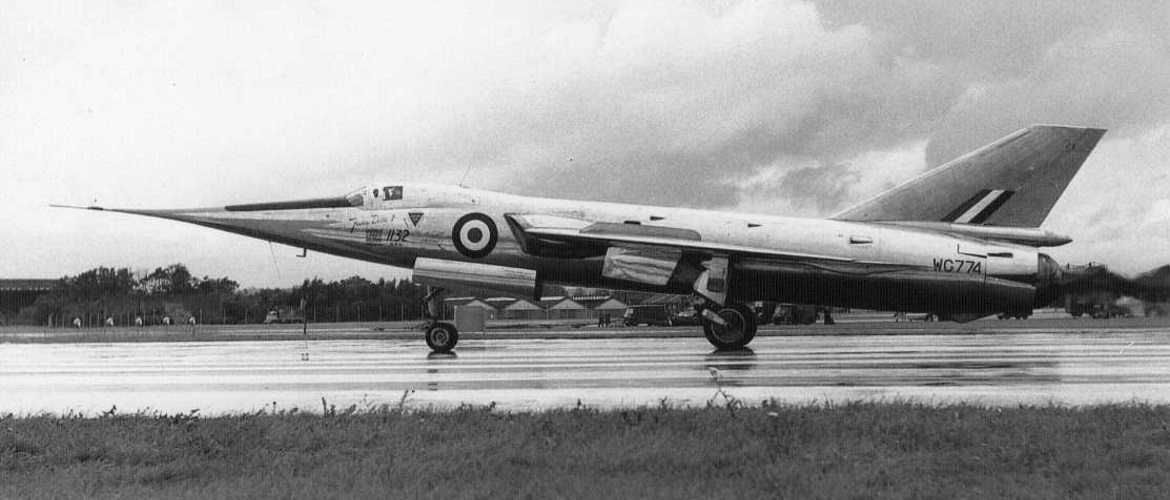
    The aircraft chosen was WG774, an aircraft which deserves a blog post, nay, a book in its own right. She had started life as a Fairey Delta 2 (and it looked like this) , an extremely fast aircraft for its time of the mid 1950s. It featured straight delta wings, attached to a slender fuselage which contained the single engine. In 1956, WG774, with test pilot Peter Twiss at the controls, became the first aeroplane to fly faster than 1,000 mph, and then broke her own record by over 100 mph. The record was only bettered by the US F-104 Starfighter (another aircraft deserving of a blog post).

    Following modification, the aircraft became the BAC (British Aircraft Corporation) 221. Not only were new wings fitted, but many other aspects of the aircraft had been changed, including the air intakes for the engine, the landing gear and the entire cockpit and canopy. Though WG774 was slightly slower in this configuration, it did perform admirably and returned much useful data for the program. The cockpit could already be tilted down, in a similar fashion to Concorde’s “droop snoot”, and this was carried over to the BAC 221 with the new cockpit.

    This was necessary due to the high angle of attack that delta wings require to generate lift at slow speeds. Ordinarily, this would mean that the nose would be pointed so high the pilot would have a poor view of the ground, or even none at all, which was hardly satisfactory. Many aircraft over the years would feature a “droop snoot” to solve the problem, including the ill-fated Soviet Tupolev 144, the only aircraft to come close to Concorde’s achievement.

    Of course, in the slow speed regime, it was difficult to use one of the fastest aircraft on Earth. Thus, a decision had already been made to build another aircraft to test delta wings at slow speeds, which became the Handley Page HP 115. Fitted with a single, small jet engine, placed rather inelegantly on top of the fuselage, this aircraft proved that it was indeed possible to control a delta winged aircraft at very slow speeds, and flew many times during the 1960s. A picture can be seen here. It was even due to be flown by a certain Neil Armstrong in 1969, but, as I am sure you know, he became otherwise engaged…

    There were many other aircraft that contributed, in many small ways, to the Concorde programme, which I have not mentioned here, for example the airliners used to shuttle engineers between the Britain and France. However, I thought that these were the most noteworthy, and certainly the most bizarrely British, and warranted bringing to your attention.

    So where are we today? I am pleased to say that examples of all 3 aircraft can be seen at museums in Britain. XF 926, the sole surviving Bristol 188, now resides at the Royal Air Force Museum Cosford, not far from Wolverhampton. The Fleet Air Arm Museum in Yeovilton now houses both a HP 115, and WG774, the only BAC 221 that was ever made, along with a Concorde Prototype. Unfortunately, WG774 is quite literally overshadowed by the bigger, better known Concorde prototype, despite her significant place in aviation history.

    As usual, comments are welcomed and encouraged.

    May 26, 2018

  • Perfect is the Enemy of Good Enough: APT vs. HST

    APT vs. HST

    In the 1960s, British Rail had a problem. Passenger numbers were down hugely, and money was being lost hand over fist. The Beeching reports and numerous other cutbacks had left the network far smaller than it had been when they inherited the network in 1948. This had left British Rail, despite a comprehensive rebranding programme, with a poor public image.

    Furthermore, the railways no longer had a monopoly on long distance transport. Cars were now more reliable and affordable than ever, and new motorways and dual carriageways were being built across the country. The future, it seemed, lay with motoring. Furthermore, aircraft were fast, glamourous and luxurious, and airports were growing across Britain, presenting a faster alternative to rail on many routes.

    Although British Rail was rapidly getting rid of steam locomotives, journey times were still relatively high with the new diesel and electric traction. Rolling stock was still fairly old fashioned; air conditioning was the exception rather than the rule, and modern interior design was almost unheard of, at least until the newer mark 2 coaches. It was decided that something must be done to compete directly with the airlines and motorways.

    Radical engineers were brought in, some from the aviation industry, and they immediately discovered a problem. You see, Britain’s railways are full of curves, mainly because they were built by Victorian engineers, keen to avoid clashes with irate landowners and expensive civil engineering. Now you could build new, straighter railways, as many countries, notably Japan and France, did (we’re now doing this with HS2), but British Rail was in no position to do this, being cash strapped after all.

    Trains can travel around curves relatively quickly, but this makes passengers inside very uncomfortable, as they are thrown to the outside of the curve. The engineers noticed that motorcycle riders also have this problem – so they lean into the curve. This cancels out the centrifugal force on the motorcycle and rider, allowing the motorcycle to corner quickly. So they  decided to apply this to railways, and tilt the body of the train into the curve.

    The tilting train idea was given the term “Advanced Passenger Train” or APT, and by 1972, a working prototype, the Advanced Passenger Train – Experimental or APT-E, had been built. This was, by and large, a success, and although it only consisted of 2 power cars and 2 coaches, it was still very fast, and the tilt worked as intended. (You can see what it looked like here)

    Unfortunately, the APT-E was powered by gas turbines, an innovative propulsion system but unfortunately a very thirsty one. This wasn’t an issue in the 1960s, as oil was plentiful and relatively cheap. However, with the oil crises of the 1970s, this was no longer the case. The APT-E, following relatively few tests, was withdrawn. Preparations began to be made to produce a production version, powered by electricity. It was dubbed the “Advanced Passenger Train Prototype” or APT-P.

    It was 1978 when this finally appeared, and it was a rather different animal. The train was now propelled by 2 electric power cars in the middle of the train (packing 4,000 hp each), with coaches on either side (more on this later) which featured proper passenger accommodation and catering. Access was via compressed air powered doors, and the construction was similar to an aircraft’s, an aluminium monocoque, which made it much lighter than British Rail’s usual trains, and far more energy efficient. It also looked radically different to anything on British Rail at the time (see this photo).

    Not only was the new train capable of tilting, it was also very fast in a straight line. The APT-P was worked up to speeds in excess of 160 mph on test, on conventional track, though due to signalling constraints, it would travel at 125 mph in standard service, still faster than all conventional trains on the West Coast Mainline. Many within British Rail felt they were onto a winner, and, on the surface, it seemed they had a point.

    However, some in British Rail had other ideas. You see, BR’s traditional engineers didn’t like all this radical interference in what had been their matters. They reckoned they could deliver a 125 mph, air conditioned diesel train, using conventional technology, operating on conventional track, by 1975. This train wouldn’t tilt, but on a relatively straight main line like the Great Western or East Coast, it would be far quicker than the then current rolling stock, and importantly, it would be at a fraction of the cost of the APT. British Rail decided that this project would also go ahead, as a stop-gap before the APT could be brought in. It was given the name High Speed Diesel Train, HSDT.

    Again, by 1972, a prototype was ready, with a diesel power car at each end, and it was tested up to a speed of 143 mph. Passengers on press runs were impressed by the smooth ride of the new mark 3 coaches that formed part of the train, as well as the internal sliding doors, operated by a treadle under the carpet. Following these tests, preparations were made to engineer a production version, to go into service on the relatively straight main line between London and Bristol.

    Determined to make this a success, they brought in the industrial designer Kenneth Grange, who turned the rather ugly HSDT into the beautiful, iconic Inter-City 125, or just High Speed Train, or HST (the striking livery is shown best in the manual here). Following a period of trains being interleaved with regular services, the train entered full service, at 125 mph, on October 4th 1976, admittedly a year later than promised. It was a phenomenal success, popular with passengers and crew alike. Inter-City 125 became a household name, and British Rail milked the publicity for all that it was worth, producing numerous badges, posters and television advertisements featuring their new train.

    Meanwhile, things began to go wrong with the APT-P. While initial trials had gone well, there were troubles with reliability and costs were soaring, much to the chagrin of the new Thatcher government. Thus, the decision was taken to put the APT-P into service on a limited basis, to show that British Rail was giving the public something for their money. The service began in early 1980.

    To put it mildly, this was not a success. The compressed air powered doors suffered from problems as water got into the system and froze in the winter, so the doors were unreliable. As the power cars were in the middle, people couldn’t get between the coaches, so to avoid people all jumping on the rear of the train at the last minute, they had to book a seat in advance. This was the least of their problems though, as the power cars had not been properly weatherproofed. The winter weather played havoc with the train, with consequent bad publicity.

    Worse still, even when the train worked, it was making people sick. The tilt which was supposed to remove discomfort actually did cause some discomfort, because when the train rounds a curve, you expect to feel a centrifugal force. If you were looking out of the windows, this would result in a sensation not unlike sea sickness. BR also decided to serve alcoholic drinks to members of the press on the train, which made the problem feel even worse.

    What could have been a revolutionary breakthrough in train technology became a national laughing stock. APT was routinely mocked on television, in the newspapers and on the radio, with British Rail made to look thoroughly incompetent at every turn (or tilt). Much of the criticism was unfair, but sadly with the press, this did not matter.

    British Rail management lost their nerve and withdrew the APT-P trains. The project was officially cancelled, though work would continue for the next few years as a technology demonstrator. If you were lucky, one of the APT-Ps might turn up on a relief train, but British Rail did not publish the times they would be deployed, almost as if they were ashamed of the train. However, many of its reliability problems were solved, and its tilt reduced slightly to eliminate the sickness problem. The plan to eventually produce a huge fleet of APTs was scrapped, though much of the technology would be incorporated into the InterCity 225 electric trains for the East Coast Mainline.

    So where are we now? One of the APT-Ps was hushed up in Crewe, where it can still be seen at the Heritage Centre. The tilt is still operable, and is occasionally powered up for demonstrations. This potentially revolutionary piece of technology now rots away, almost bereft of publicity. Having spoken to people at Crewe, it is clear that it would take many, many millions to bring the APT-P back to mainline operational standard, and it is unclear who would undertake such a venture.

    The APT-E now farms part of the National Collection, and can be seen at the National Railway Museum Shildon (sometimes called Locomotion). Occasionally, tours are given of the train, and it has been cosmetically restored, though it is unlikely to run again. On test, it had only covered a measly few thousand miles, but its gas turbines are extremely non-standard in railway terms.

    Oddly enough though, that isn’t quite the end of the story. The patents generated from the APT were sold abroad. Years later, the Pendolino, another tilting train, was introduced to the UK by Virgin (a picture can be found here), incorporating much of the technology developed for the APT. In essence, the technology has been sold back to us, although in a train that has nowhere near the number of problems of the APT. Importantly, the Pendolino has its electronics beneath the floor of the train, so you can walk through the entire thing, no awkward booking required, and with Virgin’s publicity machine, the Pendolino has been a phenomenal success.

    What of the HST? Well, HSTs still form the backbone of UK intercity trains today, over 40 years later, with some relatively minor refurbishment. The original Paxman Valenta engines, while powerful and light for their day, were also extremely loud and had relatively short lives. In the mid 2000s, these engines were replaced with either modern MTU engines from Germany or  home-grown Paxman VP185 engines. Head and tail lights were also replaced, but few other modifications needed to be made.

    The mark 3 coaches were used not just for the HST, but also for many electric locomotive hauled trains, some of which are still in service on the Great Eastern Mainline between London and Norwich. The mark 3 continues to receive praise for its ride quality, crashworthiness and comfortable seating, and with modern upgrades such as plug sockets and Wi-Fi, they remain a favourite with passengers.

    Only now are the HST’s replacements (the Intercity Express Programme , or IEP trains) fully being introduced, and even then, it is taking far longer than it was supposed to. The IEPs have also had teething troubles – on the first service run, an air conditioning unit malfunctioned and literally poured cold water on passengers (though this hasn’t happened since). There have also been many complaints about the new interiors, as compared with the older HST ones. Eventually, these issues will be solved, but it just goes to show how good a design the HST is.

    Even then, after a thorough refurbishment, including power-operated doors and a shortening to 4 or 5 coaches to improve acceleration, some HSTs are being deployed in Scotland as fast, intercity trains, without the need for great expense. Sound familiar?

    As usual, if you have any thoughts on this, I would very much appreciate hearing them in the comments. Perhaps this wasn’t your cup of tea, in which case, I would be grateful of your sharing this with someone who might find it more akin to their porcelain rounded container of dried exotic leaves in boiling water. If it was your cup of tea, hurray! success! My work here is done.


    May 23, 2018

  • A Defence of Dr. Beeching

    Even if you don’t follow railway affairs, you (almost) couldn’t fail to have heard of Dr. Beeching. Yes, that most famous chairman of the British Railways Board has had quite the impact on popular culture, notably the TV series “Oh Doctor Beeching”, among other mentions on television, radio, literature, and so on.

    The popular image of Dr. Beeching is that of a wild axeman, determined to close down lines and isolate local communities, a man of extreme coldness, verging on nastiness, who didn’t really believe in railways. While this view is not without foundation in fact, it certainly is not a balanced view of the man, and does not summarise his actual impact on the railways of Britain.

    To start with, he was hardly brought in at a railway-friendly time. When Dr. Beeching became the British Railways Board chairman in 1961, it was abundantly clear to British Railways’ managers that the railways were in financial trouble. BR had actually started the 1950s in profit, but as the decade wore on, the railways slipped from the cautiously optimistic black, to a very deep red. Money was not just being lost – this was a haemorrhage of cash.

    Why was this? Partly, this could be attributed to higher labour costs, as people were increasingly unwilling to work with dirty steam engines when more money could be had in cleaner industries. However, this is only part of the story, since BR was also reducing its staff numbers and introducing cleaner diesel and electric trains. One huge reason for the decline was loss of traffic to the roads. This had not been helped by the investment in roads and new motorways taking place in the late 1950s and early 1960s.

    Which brings us neatly on to the Minister of Transport at the time – Ernest Marples. Marples had profited from the increase in road building due to his joint ownership of civil engineering firm Marples Ridgeway and Partners. On becoming Minister of Transport, he undertook to sell his shares in the company to remove this conflict of interest. It later transpired that he had sold these shares – to his wife. Clearly then, this was not a political climate friendly to the railways.

    It was obvious then, that Beeching was not going to recommend keeping every railway in the country open. But what is less obvious now is that many lines that he recommended to keep, for example the line to Hunstanton in Norfolk, were in fact closed by BR management anyway, even those which were turning a profit (and the Hunstanton line did). Even stranger, many lines he recommended for closure remained open, partly from local pressure but also from BR management. I must also mention that the regions of British Railways closed many more miles of track than Beeching ever did, even before 1961.

    This talk of closures also masks something else you might not know. You see, Beeching produced 2 reports, not just the one. The first is the one we are all familiar with – the one recommending closure of lines and generally bad news – which was released in 1963, called “The Reshaping of British Railways”. The second, lesser known report came out in 1965, called “The Development of the Major Railway Trunk Routes”. While it can be argued that this report is implicitly recommending closure in its arguing for concentration of traffic on a small number of lines, the explicit calls for investment are undeniable in this report. In it, Beeching recommends that lines be electrified and new rolling stock brought in, a very modern attitude few would attribute to him.

    This brings me conveniently onto the actual impact of Beeching on the railways. Aside from the closures, what Beeching really did was revolutionise the management of the railway. Things would no longer be done the same way they always had, merely because they had always been done that way. He argued that the then current methods of freight shipment (trains formed of tiny wagons not fitted with train brakes, ambling around the country at 35 mph max.) were inefficient (quite aside from the slow pace, the sorting of these wagons was extremely costly). This led to the creation of newer methods, such as the Merry-Go-Round coal train and freightliner services.

    Merry-Go-Round (MGR) coal trains were formed of modern wagons (with full brakes), which would constantly be on the move thanks to newer loading and unloading methods. The train would be driven at slow speeds through the loading and unloading sections, with a catch ensuring that wagons could be emptied through doors in the bottom at the power station. Furthermore, these trains could be much faster due to their proper brakes, and, since they operated in fixed formations, did not need to be sorted en-route, saving further time and money.

    Freightliner trains used a revolutionary new development – the shipping container. Rather than taking small wagons of freight from small sidings around the country, goods would instead be packed into standard shipping containers and taken by road to a freightliner terminal, where they would be loaded onto a fixed formation train that would travel to another freightliner terminal, when the process would be handled in reverse.

    Both of these types of train were successful. In fact, both types still exist today, although coal is definitely on the decline. Beeching also came up with the concept of Inter-City, a brand image for all of British Rail’s fast mainline services, and presided over the introduction of the British Rail (yes, the “ways” bit was dropped at this time) corporate identity, including the double arrow symbol we still use to this day.

    I could go on about this topic for a very long time. I did not mention the modernisation plan of 1955, which to some extent is relevant to this story, but alas, if you are interested I may write about this in future. As always, if you spotted anything I missed, or heaven forbid a mistake, please feel free to let me know in the comments.

    May 21, 2018
    1950s, 1960s, Beeching, British Rail, British Railways, Closure, Doctor Beeching, Freightliner, MGR, Modernisation

  • The Bizarre and Incredibly Ambitious World of 1950s British Aviation

    World War 2 had left the United Kingdom in a spot of financial bother. The war had been phenomenally expensive, and Britain could hardly demobolise its military fast enough. Unfortunately, conflicts were breaking out in Malaya, then eventually in Korea too, and soon the empire was melting away, as Britain could no longer afford to keep it and local opinion favoured independence.

    However, one thing that the war had blessed Britain with is technical expertise. In particular, Britain now led the world in aviation; she had produced the legendary Spitfire and pioneered the jet engine. This in turn led the UK to sell jet engines to the Soviet Union, allegedly only for civilian use, which were in the end used in the MiG 15, a fearsome fighter that shot down many Allied aircraft over Korea.

    Such expertise could be put to different uses. Britain had begun developing a nuclear weapon, determined to remain a world power after the Americans refused to share the ones developed under the Manhattan project. They would need a delivery system for this weapon and so the air ministry issued several operational requirements and finally a specification for a long range, jet powered bomber which could lift a large bomb load with a range of 2000 nautical miles and a cruising speed of 500 knots. The idea was to have something that would fly higher and faster than any interceptors.

    This was way beyond what had been done previously, but Britain had the expertise. 3 designs, the Vickers Valiant, Avro Vulcan and Handley-Page Victor, were produced, and were collectively known as the V-Bombers (you might know the Vulcan better than the others – XH558 was flying until very recently). It quickly became clear however that newer Soviet surface to air missiles were very capable of shooting down the V-Bombers, and that something would have to be done.

    One way of solving this would be to produce a new aircraft. Within this, there are several options. One way of doing this is to go low and fly below the radar (I will probably write a post some day about what came of this, but for now, suffice to say that it was tried). The other method was to go even higher and faster.

    So an operational requirement was drawn up by the Air Ministry. This proposed, in all seriousness, a Mach 3 capable reconnaissance and strategic bomber aircraft, which would cruise at 60,000 ft. As if this wasn’t ridiculous enough, several manufacturers, including English Electric, Avro and Handley Page, submitted designs, to go into service in the early 1960s.

    Most ambitious was the English Electric design, the P10, which featured 12 (yes, 12) ramjet engines, mounted inside very thin wings (a model can be found here). Extra fuel pods would be carried on the wingtips, which would be jettisoned once the fuel ran out. Needless to say, even the Air Ministry thought this was a bit much, and plumped for the much simpler Avro 730 instead.

    Meanwhile, there was a fear that the Soviets might be developing their own supersonic bomber aircraft. At the time, the RAF was using the Gloster Javelin, a subsonic aircraft that would not be capable of intercepting a supersonic raider, and converting to the famous English Electric Lightning, which was much faster, but still considered insufficient.

    Again, an operational requirement was drawn up, proposing an aircraft that could fly faster than Mach 2, to make intercepts in a very short time, and carry infra-red or radar-guided missiles (in development at the time) to shoot down Soviet bombers before they got near the UK. This spawned a range of designs. Some, like the Fairey Delta 3 and English Electric P.8, were derivatives of existing aircraft, but others were radical new designs, featuring such advanced technology as rocket boosters. You can see some artist’s impressions of what these would have looked like here.

    Suffice to say, for a country with slender resources, all of these aircraft (and these are just 2 operational requirements, there were many others) were vastly over-ambitious. To put this into context, at this time, most of British Railways was still using steam trains, and wouldn’t get rid of them on the main line until 1968. Even if there had been a real need for them, the development costs would be prohibitive, even with American money.

    Really it was the advent of Intercontinental Ballistic Missiles (ICBMs) and Submarine Launched Ballistic Missiles that completely changed the game. No longer would the Soviets attack Britain with supersonic bombers (they didn’t actually have one at the time), but they would attack with missiles that would be impossible to shoot down. Equally, it would be far easier for Britain to strike at her enemies with American made missiles than home grown sci-fi technology. Furthermore, surface to air missile technology had advanced to the point that an aircraft flying at 60,000 ft and mach 3 could in theory be brought down over the Soviet Union.

    The 1957 Defence White Paper pointed out this obvious trend towards missiles, and cancelled all of the projects described above. In fact, it only recommended one aircraft to be developed, but that really is a story for another day.


    May 19, 2018

  • The Golden Era of British Railways (that might surprise you)

    When was the golden era of British railways? It seems a truth widely acknowledged is that this was the 1920s and 1930s, the time of Flying Scotsman and the Royal Scot, of romantic streamlined expresses steaming across the nation and of brilliant British engineering. This was definitely not the golden era of railways, but more on this later.

    Ah you might say, are you going to make some clever argument that we are in fact living in a railway golden era? No, I’m not, though that is far closer to the truth than the previous guess.

    A few more cynical readers might suppose that the golden era was that of British Rail, with the railways not being run for profit, but instead for the good of the nation. This is not the case either, and again, more on this later.

    No, if there was a golden era on British railways, it was between about 1890 and 1914. This may be an era of railways you’re less familiar with, so let me fill you in. At this time, the railways were run by many, many vertically integrated (owning track and train) companies, far too many to list here. Some of these companies were very small, in particular light railways, perhaps owning a few miles of track and small items of rolling stock. They might not even own their locomotives – many were bought on hire purchase.

    However, some of these companies were relatively large. During this period, the London and North-Western Railway (LNWR) was the largest commercial enterprise in the entire British Empire, and hugely profitable. The LNWR was by no means unique – the Great Western, the Midland and the Lancashire & Yorkshire were also large companies, making handsome profits.

    These companies between them had built enormous mileages of track. This was the era of maximum track mileage – there have never been more railways in this country. Barely a village or hamlet was left without a rail connection, and, since there was no real alternative to railway travel for long distances, many of these lines survived where they wouldn’t today.

    Furthermore, there was genuine competition in this era. The companies making up the East Coast Mainline (the Great Northern and North Eastern Railways) competed vigorously with the companies making up the West Coast Mainline (the LNWR and the Caledonian) for traffic to Scotland, resulting in races to the North and never before seen speeds. Adding to the competition was the Midland Railway, which also ran services to Scotland via the slower but more picturesque Settle and Carlisle route.

    During this period, the big companies upgraded many of their trains enormously. Where previously trains had no toilets or lighting, and you had to stay in your compartment, modern express trains now featured electric lights, flushing toilets and corridor connections. That corridor connection proved handy – you could now take a stroll to a restaurant or buffet car, where you could eat fine food on the move.

    All this advancement continued until the First World War. The war put the railways under never-before-seen pressure, and for the first time under government control. This is a topic for another time, but suffice to say World War One was not a happy experience for the railways, during or after.

    What of the supposed golden era? Well, I will grant you that the streamliners of the 1930s were faster than anything seen previously on British railways, but they were an operational headache, because most trains were much slower. This was an era where for most passengers, little had changed in decades, and certainly speeds hadn’t improved. Trains were mostly dirty, old and slow, especially freight trains.

    Road and soon air competition nibbled away and the companies (the big four, the London North Eastern (LNER), London, Midland & Scottish (LMS), the Great Western (GWR) and the Southern (SR)) struggled to keep their heads above water. Lines began to be closed, and the trend had been set for the rest of the century. Then the Second World War put an end to what hopes they may have had of investment (more on this in future).

    The British Rail era (1965 to 1994 – the railways had been nationalised in 1948, but British Rail wasn’t the company name until 1965) was certainly not a golden era. The railways were in poor financial health and were reliant on government subsidies, and investments, when they did come, were minimal and failed to address underlying problems. Great strides were made in efficiency, and the business sectors of the late BR era proved relatively successful, but passenger numbers were way down.

    Mind you, this is a topic ripe for debate. If you have your own ideas, or you’ve spotted something I’ve missed, I would love to hear about it in the comments.


    May 16, 2018

  • The Bic Cristal

    Picture the scene. In this modern world of smartphones, computers and near universal internet, you have to do something incredibly old-fashioned – write something down on paper. So you pick your trusty, fine parker pen, the sort that lasts for years, a fine piece of design and engineering, a family heirloom perhaps.

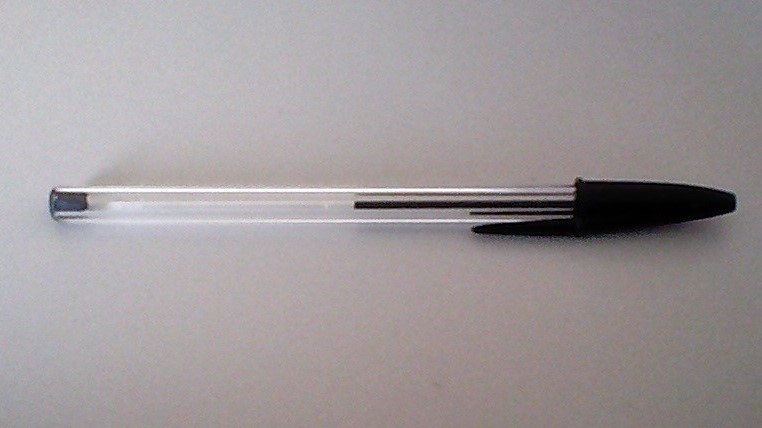
    Except no – you don’t really do this. No-one really does this. You instead reach for the cheap, easy to hand disposable biro. Like this one

    WIN_20180515_14_37_53_Pro (2)

    This is a Bic Cristal, possibly the world’s most mundane design classic. They’ve been churning out these little French buggers since the early 1950s, and over 100 billion have been made. Mass production and competition means that these can now be had for mere pence. A packet of 10 rarely reaches the dizzying heights of £2.

    This isn’t the first ballpoint pen by any means, but like all ballpoints, it boasts fast-drying ink and an incredibly precisely machined ball in the nib. This one though is ingenious for its ease of hold (it’s got a hexagonal cross section like a pencil) and the clear barrel (the thing that goes round the cartridge) so you can see the ink level. It is also very cheap and easy to mass-produce, with many parts being injection moulded plastic.

    It’s not a perfect pen by any stretch of the imagination – it’s not the most comfortable for writing at length and its ink delivery isn’t quite right. But it is good enough (unless you’re doing calligraphy) and the Bic Cristal (and its copies) are available everywhere, all the time. If you break one, who cares? Plenty more where that one came from.

    This is just one example of good enough being well, good enough, and perfect being largely irrelevant. Expect more examples of this is the weeks to come.


    May 15, 2018

Previous Page

Blog at WordPress.com.

  • About
  • Home
  • Contact
 

Loading Comments...
 

    • Subscribe Subscribed
      • PECULIARLY PETE
      • Already have a WordPress.com account? Log in now.
      • PECULIARLY PETE
      • Subscribe Subscribed
      • Sign up
      • Log in
      • Report this content
      • View site in Reader
      • Manage subscriptions
      • Collapse this bar