PECULIARLY PETE

  • Home
  • Contact

  • The Coming Rail Revolution

    Diesel trains are wonderful. No really, truly wonderful things. You can get enough power out of a diesel engine for most applications, the fuel is readily available and quite cheap, and, while they don’t quite have the captivating power of a steam engine, old diesel locomotives do still command attention among enthusiasts.

    That is not to say, outside of the spheres of operational convenience and trainspotting, they don’t have their problems. No doubt you, dear reader, will have heard of the dieselgate scandal at Volkswagen, and you were probably also unsurprised to learn of the various Sulfur and Nitrogen based pollutants that stem from diesel engines. Perhaps, with some astonishment, or a sense of unsurprised resignation, you may have learned of the quality, or lack thereof, of the air in the cities of the UK. Yes, we learn that the air quality in the great cities of this nation is far worse than the limits set by both the UK and many other organisations, including the EU.

    Of course, this is a difficult issue of modern times, and if we are being honest, the main culprit is most likely the proliferation of motor vehicles powered by fossil fuels. I confess that this is not my area of expertise, but for some more detailed commentary on the issue, I refer you to my article on cars, which can be found helpfully here.

    But, my dear reader, we should not be complacent about the railways, and our aforementioned diesel trains. Though, due to the low-friction nature of the steel wheel on steel rail system on which railways work, the energy consumption of a train per passenger is lower than a car, we should perhaps give trains a lower priority, this is no excuse, as I shall now explain.

    You may have noticed shiny new Tesla cars appearing on the roads, or perhaps on television. If you haven’t seen one of these fine new American machines, you may well have seen a different kind of electric automobile, a Nissan Leaf maybe, or a (fairly odd-looking, if I may say so) BMW i3, or some kind of Toyota hybrid car. What they show is that the electrification of the roads is coming, or rather, it is already happening, and it even extends to motorsport, with Formula E. This could, with time, reduce the harmful emissions, of the automobiles themselves that is, to nothing.

    Not content with the electrification of private transport, the inventive Mr Musk has decided to extend this potentially life-saving innovation to the complex world of road freight. He has devised this electric truck, that he claims at least will do 300 miles on a single charge, and 500 for the top model. Now I am not going to try and argue that this is a bad thing, as in itself this is rather good news, particularly for those living near main roads, but I am slightly worried about this development. I am not concerned, dear reader, about the issues of building such large batteries, and the environmental problems thereof, though that is a valid concern.

    No, I am concerned because this makes us in the rail camp, frankly, look bad. At the moment, rail freight is much more environmentally friendly than the equivalent road freight. After all, one lorry can take only one shipping container, whereas one train can carry over 30. The low steel wheel on steel rail friction also reduces the energy consumption per container, so on the assumption that both modes (road and rail) are using diesel engines, rail is going to result in lower overall emissions. However, with the road freight electric, this is turned on its head, as the rail option is still producing emissions.

    Now I shall grant myself, and the others in the rail camp, the small comfort that some of the main lines in the UK are electrified, generally using overhead live wires from which the trains can draw power. The unfortunate fact is that most of the ports and freight terminals are not electrified, leaving the freight operator with two options:

    i) Change the locomotive from diesel to electric when the train reaches the main line

    This is possible, and used to be reasonably routine. It is a solution, dear friends, not without its problems. On the contrary, you have complications with where to change locomotives, and store them when not in use. You also have the obstacle of how to fit in all the associated train movements on an increasingly crowded network. As such, that leaves us with…

    ii) Run the train with a diesel locomotive all the way

    Far too often, this is what actually happens, even when the distances “under the wires” are hundreds of miles. All the same, as I am sure you are aware, this does bring the problem of emissions.

    So a solution that reduces, or preferably eliminates, the emissions of freight locomotives, is needed.

    Earlier I mentioned the various electric automobiles that are beginning to furnish the driveways of fine, upstanding UK citizens. This brings me onto the subject of passenger transport, and here again, railways are in a spot of bother. You see, there are many routes on which there is no electrification, particularly in the North and in the Midlands, mainly due to economic reasons. Much of the reason is economic – one cannot make a good business case for electrifying a railway, with the associated cost of overhead wires and their structures, which only has perhaps 4 trains an hour. Regrettably, the automobile manufacturers can justify the expense for a car for about 4 people.

    You also have similar problems with non-electrified lines joining electrified ones, but the problem is even worse with passenger trains. The majority of passenger trains are formed of multiple units – that is, trains with engines and traction equipment under the floor, and in fixed formations with a fixed number of carriages. This confers a number of advantages on the train operator, who does not have to spend the time and money of marshalling trains together, or allocate a locomotive of the correct power rating for the train. It makes it almost impossible to make diesel trains run on electricity from overhead wires, however, and bi-modes (trains with diesel engines and electrical equipment) are heavy and expensive.

    So again, a solution is demanded to reduce, or preferably eliminate, the emissions of passenger trains, at least the lightly used ones. I am of course not talking of the excellent electric trains, of which you are no doubt aware, that operate in numerous parts of the country. These are already zero emission, at least at the point of use.

    At this point, you have either decided that I am waffling far too much, or are curious to know how the railway industry gets itself out of this newly developing pickle. Well, if you are in the first camp, I’m afraid I can’t help you, but enjoy the rest of the internet. If, on the other hand, you find yourself in the second camp, allow me to enlighten you.

    One potential solution is to use an alternative fuel – hydrogen. Hydrogen is the most abundant element in the universe, a fact which I’m sure you covered at school, and is also the simplest element, consisting merely of a single proton and an electron. This is all tremendously interesting, but what we are really interested in is that hydrogen can be combined with oxygen in a fuel cell to produce electricity. Electricity which, in sufficient quantities, can be used to power traction motors, and hence a train. Electricity produced with the only waste product being water. Ah, you might say, fascinating, but this all sounds rather sci-fi. The truth is that hydrogen fuel cells are nothing new, and have been used in the space industry for decades, most notably on the Apollo moon missions.

    I must admit, readers, before I get carried away, that although hydrogen is the most abundant element in the universe, it can be hard to come by here on Earth. It tends to be combined with other things such as natural gas or water, and the extraction process can be energy intense. The good news is that extracting hydrogen from water (a process called electrolysis) only requires electricity, which can come from renewable sources, or during the night when it is not currently being used.

    Hydrogen is not terrifically energy dense, at least in terms of volume, presenting something of a problem to the potential train designer. To get around it, hydrogen is stored in pressurised tanks, fitting much more hydrogen in a smaller space, but even this doesn’t give the energy density of diesel. For a small regional train, this isn’t necessarily a problem. For a freight locomotive… well, we’ll come back to that.

    In Germany, a hydrogen fuel cell powered regional train, one of Alstom’s Coradia range, the iLint, is already under test. It will do 140 km/h, which, in British, is 87 mph, plenty on most smaller regional railways around the country, especially considering the increased acceleration that electric motors provide over the conventional hydraulic transmission of a diesel train. Alstom already have their sights set on bringing a version of this train to the UK.

    That said, it won’t be as simple as just shipping it over on the next appropriately sized ship. The loading gauge, that is, the width and height trains are allowed to be, is narrower in the UK than on the continent. As such, the train will have to be reworked (a result of the lack of energy density) before it will physically fit on the UK network, which will take time.

    Anyhow, support for the idea of hydrogen trains in the UK continues, partly drummed up by a little project from the University of Birmingham. This actually came out of an Institute of Mechanical Engineers challenge, to build a 10 1/4 inch gauge locomotive that can, among other things, recover energy from braking. It was decided to build a locomotive that used a hydrogen fuel cell, mainly, I am told, as batteries would be a rather boring and predictable power source. This locomotive has undergone numerous iterations over the years, but until now was really rather obscure.

    Over the past year or so, the locomotive has been worked on, and she has acquired a new set of clothes, a much more pleasing result than in previous years. Officially, she is the University of Birmingham’s IMechE Railway Challenge entry, but she is now better known as Hydrogen Hero. She has already appeared on the local BBC television news, with yours truly at the controls, at Rail Live 2018, even attracting the Secretary of State for Transport, Chris Grayling. On the 30th July this year, she was again demonstrated by yours truly (on the left, in the orange) to Grayling’s opposite number, Shadow Secretary of State for Transport, Andy McDonald:
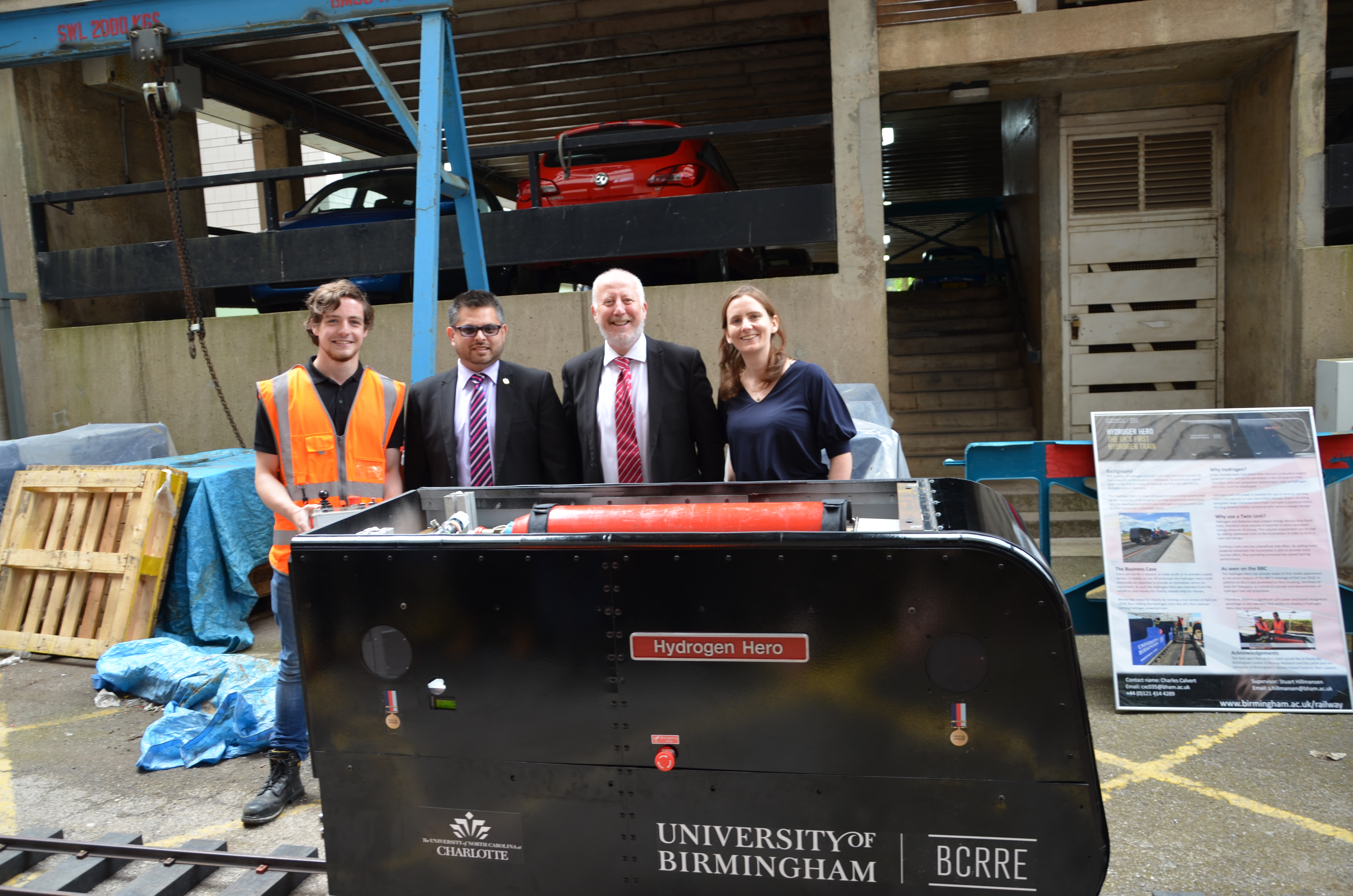
    EPS_0130

    In doing demonstration runs, our relatively small team has been raising money for Help for Heroes, by taking donations from passengers. I am sure you’ll agree this is a worthy cause, and somewhat justifies the name, but, importantly, this makes our little locomotive the first revenue-earning hydrogen train in the UK.

    Now, I may have mentioned earlier the freight side of things, and the trouble with energy density. This is not the only problem. Hydrogen fuel cells produce a fairly constant amount of power, which is fine usually, but during high-power moves, such as starting a heavy train or accelerating up a hill, this is not quite enough. A solution is to charge batteries using the fuel cell’s power when the train is stationary, or cruising using little power, and to use the power stored for the high-power situations. One can also use the motors as generators to charge the batteries when the train brakes, increasing energy efficiency. Needless to say, these batteries also take up space.

    A solution to this is to have 2 vehicles, instead of one. In one of these vehicles, you could incorporate hydrogen tanks and batteries, and in the other the power electronics necessary. All the axles of the train could be powered with traction motors, which would also increase the tractive effort of such a locomotive over a conventional one, given that you now have twice . This is the eventual plan with Hydrogen Hero. 

    My point, if I may conclude, is that the technology to do this exists today, and that there is no shortage of ideas, particularly in Europe. I firmly believe that hydrogen is the way forward, and I would urge the policy-makers and railway companies to seriously consider making use of the technology.

    With that, as usual, I shall wish you an excellent day.


    August 4, 2018
    Conservative, DfT, Electric, Future, Hero, Hydrogen, IMechE, Labour, Rail, Railways, Revolution, Trains, Transport, UK, University of Birmingham, Zero-emission

  • The Last Voyage of Admiral Graf Spee

    Graf Spee

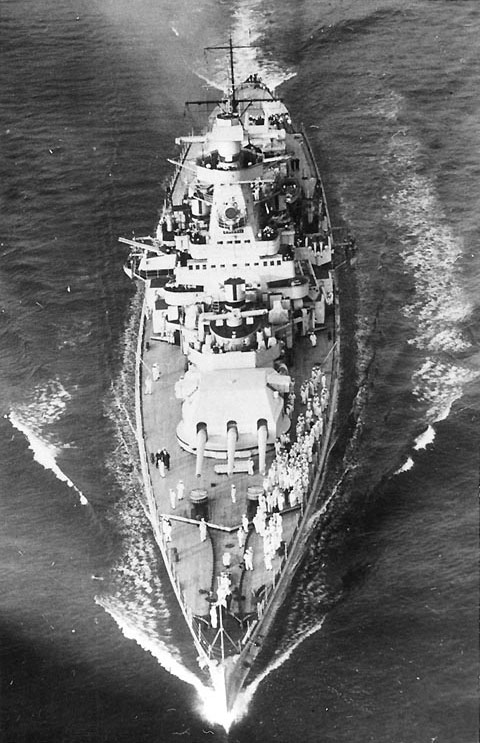
    30th June 1934. In the Reichsmarinewerft shipyard, Wilhelmshaven, a ships’ hull lies on the slipway. She is far larger than anything Germany has built since before the First World War, and, though not yet fitted out, her displacement will eventually be well over 10,000 long tons. Following a short ceremony, hydraulic rams slide the hull gracefully down the slipway, as she enters the water for the first time. Nazi salutes fill the air.

    The new ship, Admiral Graf Spee, spends the next 2 years being fitted out with armaments, magazines and living quarters. By 6th January 1936, she is finally ready to set sail. Her main battery, six 283 mm calibre guns, fitted in 2 triple turrets, one fore, and one aft, is now ready to go to sea. In 1937, she participates in the Coronation Review at Spithead, in front of King George VI, representing Nazi Germany. She sits gracefully alongside HMS Hood and HMS Resolution.

    By 21st August, 1939, she has a new captain. Kapitän zur See Hans Langsdorff had been inspired to join the Navy by the family of Maximilian von Spee, who went on to be a naval hero in the First World War. Hans Langsdorff would display the same bravery on this voyage.

    On this day, the heavy cruiser sets sail from Wilhelmshaven, in company with her tender, the Altmark, for the South Atlantic. History records that on the 1st September, German troops crossed the border into Poland, which prompts the British to issue an ultimatum to Hitler, to withdraw them. By 11:00 on the morning of the 3rd, the ultimatum expires. Britain finds herself at war with Germany.

    Graf Spee, in the South Atlantic, waits. Captain Langsdorff has not yet been given permission to attack British shipping. Hitler believes that, as Poland is rapidly overcome, the British will decide on peace. In the meantime, Langsdorff decides, wisely, to keep as far away from British ships as possible, a difficult task as he does not know where the British are.

    Finally, on the 26th  September, Langsdorff receives the order he has waited for – permission to target British shipping. SS Clement becomes the first victim. Graf Spee‘s floatplane is sent over, and orders the Clement to stop, which they do, all the while sending out distress signals on their radio. Langsdorff orders the crew to take to the boats, while 2 officers from Clement are taken on board for questioning. Meanwhile, the rest of Clement‘s crew are given the correct course for the nearest port, and set free. After a short spell, the 2 officers are put on board a nearby neutral ship.

    Graf Spee‘s crew, realising that the ship is too easily spotted, decide to perform some modifications. The mast is repainted, to look like a French one, and a fake funnel and turret are installed. The next victim, the Newton Beach, fails to notice the ship approaching her is not a French cruiser, until Langsdorff gets within a mile of his prey. By then, it is too late, and, after a brief SOS signal from Newton Beach, the ship is seized as a prize.

    Crews of further sunken ships are either sent back to port, or interned on board the Graf Spee or her tender Altmark. Due to her limited fuel storage, the 2 ships rendezvous regularly to top up Graf Spee’s tanks, and to transfer provisions, either those of the Kriegsmarine (the German Navy) or those stolen from British merchant vessels.

    The Royal Navy is getting suspicious. Following a few more sinkings and captures, between the island of Ascension and St. Helena, their forces in the South Atlantic begin to close in. Unfortunately for the British, Langsdorff had thought of that, sending out a fake signal from the Newton Beach, claiming to have been torpedoed by a U-Boat, and ordering Graf Spee to proceed somewhere else, namely southwards.

    Langsdorff suspects that British ships are being re-routed via the Cape of Good Hope. He manages along the way to sink another ship, and evade not one, but two Allied task forces, including 2 battleships, a cruiser and an aircraft carrier. Despite a close call, Graf Spee slips, undetected, into the Indian Ocean. After a few sinkings and holding a neutral Dutch ship up, before deciding to leave her, the British cotton on to the raider in the Indian Ocean.

    However, Langsdorff is more concerned with the state of his ship than the Royal or French navies. While he has enough provisions to last until the end of February, the ship’s diesel engines are not in the best condition. With the ship frequently travelling at high speed, they are experiencing a great deal of strain, having already been overhauled once at sea. Graf Spee is several thousand miles from the nearest friendly port, prompting Langsdorff to decide on a return to Germany in the near future.

    Hearing reports that a convoy would be formed in the mouth of the River Plate in Uruguay, to head across the Atlantic. Langsdorff decides to head in that direction, on Graf Spee‘s way home, thinking it a chance to sink yet more shipping. By now, it is December. Summer in the Southern hemisphere. Graf Spee had, all this time, evaded the attentions of both the Royal Navy and French Navy.

    Meanwhile, to the East of Uruguay, at the Falkland islands, Commodore Henry Harwood of the Royal Navy, in charge of Force ‘G’, makes a guess. He reasons that, given the amount of shipping in the area, eventually the Graf Spee will visit the River Plate Estuary. If he sends his ships to that area, there is a possibility that they may be able to track her. Force ‘G’ consists of the 2 heavy cruisers, HMS Cumberland and HMS Exeter, and the 2 light cruisers HMS Ajax and HMS Achilles. Cumberland is out of action at the Falklands, leaving 1 heavy and 2 light cruisers.

    December 13th, 1939, dawns across the South Atlantic. Exeter, Ajax and Achilles are sailing North East. At 6:14 am, smoke is spotted on the horizon, and Exeter is dispatched to investigate, turning to port. 6:16 am – Exeter signals that she thinks it is a pocket battleship, the British designation for Graf Spee‘s type. Harwood realises that he is about to engage the enemy.

    Harwood’s problem is that the Graf Spee has the small British force outgunned. Graf Spee has six 11 inch (283 mm) guns, whereas Exeter has six 8 inch guns. Ajax and Achilles each have eight 6 inch guns, which will struggle to penetrate Graf Spee‘s armour. However, they can still do damage to the exterior of the ship, and all the ships in the engagement have torpedoes, albeit with relatively short ranges. Harwood’s solution is to split his force.

    Exeter steams straight towards the Graf Spee, while Ajax and Achilles continue on their North-Easterly course, hoping to get around the other side of the German ship. This will in theory force her to divide her fire. Langsdorff doesn’t fall for it. At 6:18 am Graf Spee opens fire at Exeter. She is soon pouring fire exclusively at Exeter, who Langsdorff sees as more of a threat. By 6:23 am all 3 Royal Navy ships are returning fire at the Graf Spee. Hits are scored with both 6 and 8 inch shells.

    A minute later, Graf Spee delivers the first solid punch. An 11 inch shell hits one of Exeter‘s forward turrets. It is completely destroyed, as are the internal communications. On the bridge, shrapnel from the turret kills all but 2 officers and the Captain. Captain Frederick Bell elects to keep fighting, with orders now being shouted from person to person down to the engine room. Exeter closes in, and fires torpedoes from her starboard side.

    Langsdorff is forced to manoeuvre to avoid the torpedoes. He turns Graf Spee hard to port, and begins to lay smoke, to throw off the accurate British fire. Graf Spee is now steering North-West, parallel to the British light cruisers, who have also turned. Ajax and Achilles continue to fire.

    Captain Bell turns Exeter around, to fire the torpedoes on the port side of the ship. Graf Spee lands 2 more 11 inch shells. One destroys the other front turret of Exeter, and the other sets a large fire. Langsdorff, seeing Exeter badly damaged, switches one of his 11 inch turrets to fire at Ajax and Achilles. They decide to back off.

    Exeter, despite the lack of command, the blaze threatening to engulf her and having only one operational turret, continues to fight. Her single remaining turret, now operating independently, continues to fire 8 inch shells at the Graf Spee. 6:50 am sees Exeter in a bad way, as she takes yet another direct hit, this one causing flooding. The final remaining turret, with water gushing in, gives up the ghost. Listing badly, and now defenceless, Bell disengages Exeter. He heads, barely afloat, for the Falkland islands.

    7:10 am – Harwood orders Ajax and Achilles to close in. Initially, Graf Spee appears to hesitate, turning away, before turning to shoot at both remaining British ships. The British land their first major punch – following 6 inch gunfire, a fire is started on board Langsdorff’s ship. The celebration is short lived.

    7:24 am – an 11 inch shell hit disables both of Ajax‘s aft turrets. Half of her firepower, and a quarter of the total British firepower, has been disabled by this hit. Undeterred, Harwood orders Ajax even closer. At a range of just 4 nautical miles, Graf Spee and Ajax launch torpedoes. Both sides turn aggressively to avoid the metal fish. With British ammunition running low, Harwood pulls his ships back, to shadow Langsdorff, who makes for the nearby port of Montevideo, making smoke.

    Aboard Graf Spee, Langsdorff assesses the damage. In the engagement, all of Graf Spee‘s galleys have been destroyed, save one. The desalination plant is out of action. Ditto the oil refinery. Water is now leaking into the ship’s flour store. Sailors lie dead. Montevideo, in neutral Uruguay, may just offer him the chance to repair. He requests two weeks to repair his ship.

    The request is denied. Being a neutral port, the ship is only allowed 24 hours under international law. Initially, the British diplomats insist on this being observed. However, Harwood is in desperate need of reinforcement for his damaged force. The British then choose to exploit the Hague convention, specifically article 16, which demanded the ship not leave port until 24 hours after a hostile merchant ship had done. The Graf Spee stays put.

    Langsdorff begins to hear reports that the British have brought in reinforcements. He also hears of large quantities of fuel oil being bought in Argentina by Britain, and puts 2 and 2 together. If he breaks out, he believes, Graf Spee will be sunk easily by British battleships and aircraft carriers. Equally, if he stays, the ship will be interned by Uruguay, and, given their British sympathies, British intelligence will be allowed to search his ship. December 14th, 15th and 16th pass, while British merchant ships leave.

    On the morning of the 17th, he boards Graf Spee with a skeleton crew. The ship gracefully slips her moorings, and is piloted into the middle of the harbour by a tug. Petrol is poured over all parts of the ship, and a torpedo warhead suspended by a rope above each magazine. As they board the tug, the petrol is ignited. The tug steams rapidly back towards the port.

    Fire engulfs the ship. An explosion then rocks Graf Spee, ironically putting out much of the fire. She will continue to burn for the next 4 days. The raider of the South Atlantic is now a smoking wreck, sinking into shallow water.

    By the 20th, Langsdorff is in a hotel in Buenos Aires, Argentina. He carefully lays out the battle ensign of the Graf Spee on the hotel bed, and lies down. As he stated in a letter written the previous evening, to the German ambassador in Buenos Aires:

    “Sooner than expose my ship to the danger that after a brave fight she would fall partly or completely into enemy hands. I decided not to fight but to destroy the equipment and then scuttle the ship. It was clear to me that this decision might be consciously or unwittingly misconstrued by persons ignorant of my motives, as being attributable entirely or partly to personal considerations. Therefore I decided from the beginning to bear the consequences involved in this decision. For a captain with a sense of honour, it goes without saying that his personal fate cannot be separated from that of his ship.”

    Langsdorff is found later that day, having shot himself. Until the battle, not a single sailor, British or German, had died due to his actions.

    He was not to know that the British reinforcements were over 2000 miles away. The reports in the media had been planted by British intelligence.

    Have an excellent day.


    July 26, 2018

  • “The Missile With A Man In It”

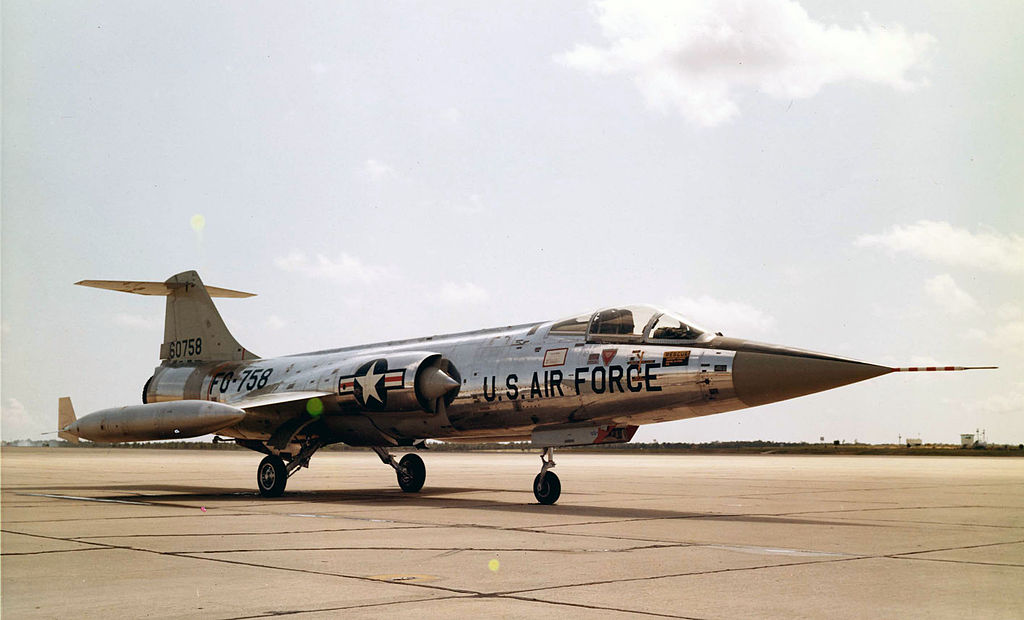
    1024px-Lockheed_F-104A-10-LO_(SN_56-0758)_060928-F-1234S-004

    25th June 1950. North Korean forces charge across the 38th Parallel into South Korea, starting the Korean war. This war would be fought with the most advanced weapons of the time, and the demands it placed on aircraft and pilots would prove the genesis of the first Mach 2 fighter – the F-104 Starfighter.

    The Starfighter’s performance is best summed up in a series of rather impressive numbers:

    103,389 ft
    Altitude record

    1404.19 mph
    Speed record

    48,000 ft / min
    Climb rate

    1st
    Aircraft to simultaneously
    hold world speed and
    altitude record

    These numbers may not mean a great deal to you, so allow me to furnish your understanding with some context. This aircraft first flew in 1954, a full 14 years before British Railways stopped using steam engines. In fact, by 1958, when the first operational Starfighters were delivered, only the UK and USSR could also boast Mach 2 capable fighters, and neither of these broke the world speed or altitude record.

    It was this performance, coupled with the slender fuselage and stubby wings, that earned the Starfighter the nickname “The Missile With A Man In It”. It was not, tragically, the only nickname the aircraft would accrue.

    Due to accidents in West German service, some in the Luftwaffe nicknamed the F-104 the “Widowmaker”. A brief look at the statistics justifies this point of view:

    292 / 900
    No. of West German
    F-104 losses

    However, this gives the wrong impression of the F-104 for a number of reasons:

    • The new Luftwaffe (1956 onwards) was a young air force lacking experience of advanced aircraft like the F-104
    • The aircraft was primarily designed as a high-speed fighter, and proved unsuited to the ground attack and naval strike roles
    • Much of the pilot training was carried out in the USA with hot, dry conditions, the opposite of the cool, wet conditions in Germany
    • Due to delays in receiving aircraft, pilots were not able to train in Germany

    This is, perhaps, borne out by the much better safety records of other air forces operating the Starfighter. The Regia Aeronautica, Italy’s Air Force, continued to operate the aircraft until 2004, a full 50 years after the first flight, a rather extreme example, but one which proves the point. In fact, Canada, Belgium, Denmark, Greece, Norway, Spain, Taiwan, Jordan, Pakistan and Turkey have all owned or built Starfighters at one point or another.

    But this isn’t the end. Now, a company called CubeCab has a plan to launch tiny satellites called CubeSats using a small rocket launched from a Starfighter. The F-104 is one of the few high-performance types that a private company, in the USA at least, can own and operate, and so is a logical choice. Much of the expense of launching satellites can be reduced by using the Starfighter to lift a payload to 60,000 ft and Mach 1, far more efficient than using a rocket for that part of the flight.

    So from a 1950s upgrade to a modern satellite launch system, that was the Missile With A Man In It. Should you wish to know more, I can recommend this excellent article on the BBC Future website.

    With that, I shall wish you with an excellent day.


    July 19, 2018

  • Perfect is the Enemy of Good Enough – Great Central vs. Midland

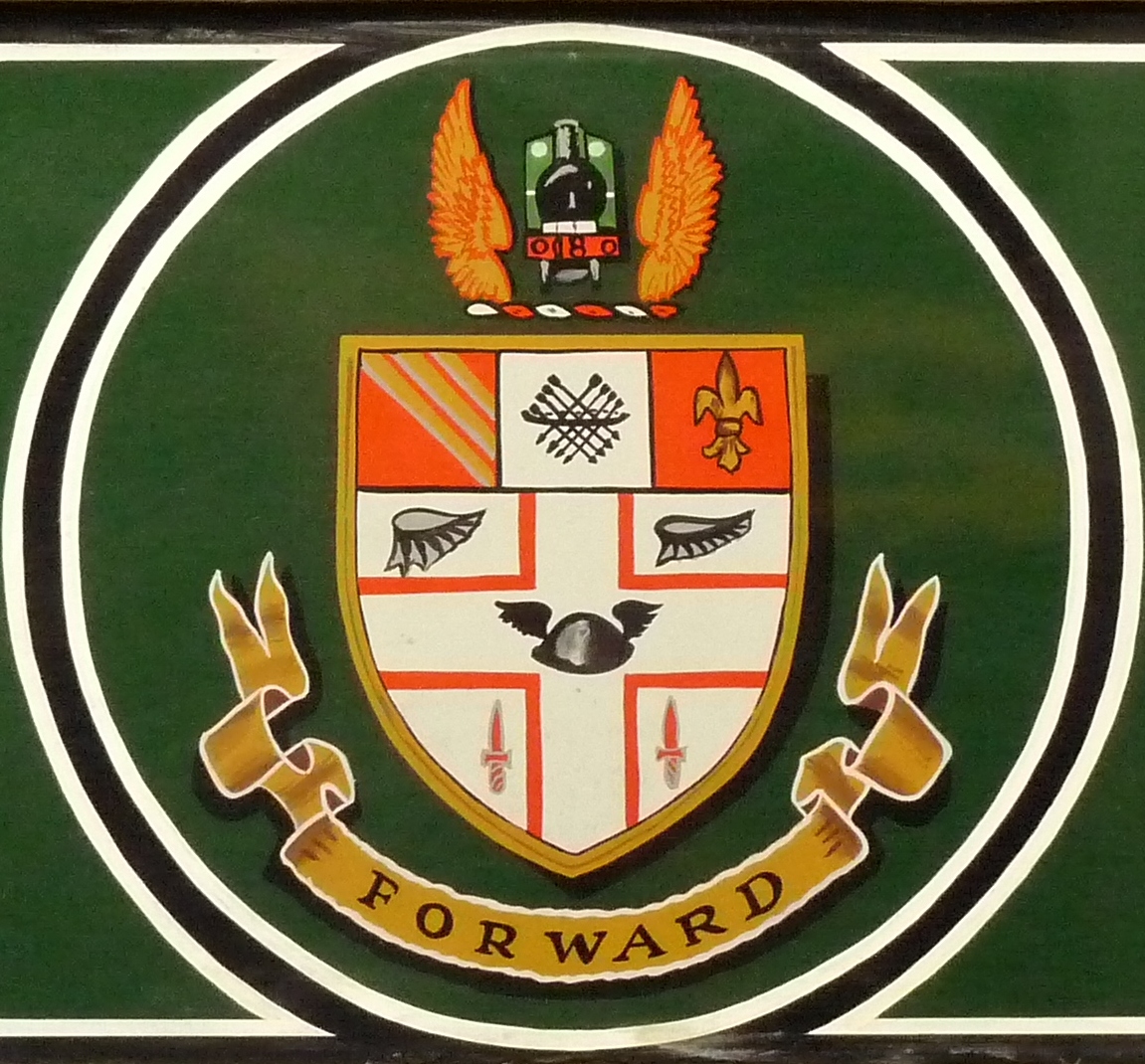
    Great_Central_Railway_Coat_of_Arms(The Great Central Railway’s Coat of Arms)
    In the early 20th century, 2 railway companies battled it out for passengers between London and the Midlands. The first, the erstwhile Midland Railway, was much more established, had created a lavish terminus in London, and made handsome profits running trains not just to the Midlands, but to Scotland and even as far south as Bristol.

    The second, the newly renamed Great Central, was a rather different affair. Lead by the visionary Sir Edward Watkin, the company had grown out of the old Manchester, Sheffield and Lincolnshire Railway (MSLR). MSLR trains were famed neither for comfort nor speed. Neither were the financial results of the railway particularly impressive, though Watkin managed to keep their heads above water. The main traffic was coal from the South Yorkshire coal fields, unglamourous but money-making work.

    Watkin, the son of a cotton merchant, had started work in his father’s business, but was far more interested in politics. When he sought to marry his first wife, Mary Mellor, who was richer than him, he had got involved in railways, as a way of making money, and soon rose up the ranks, being head-hunted by the MSLR in 1854. The cotton merchant’s son soon gained a reputation for rescuing the finances of struggling railways, along the way earning a knighthood.

    Watkin, far from being the stuffy chairman of a second-rate railway, was a hugely ambitious man. He saw the possibility of running trains to continental Europe via a Channel tunnel, and even set up a company, the interestingly named Anglo-French Submarine Railway Company, to explore options for the route of such a venture. This was not as ridiculous as it sounded – Watkin was on the board of the MSLR, the Metropolitan Railway, the South Eastern Railway, and Chemin de Fer du Nord, a French railway company, and would have linked all of them beautifully.

    Unfortunately, it was not the difficult engineering that killed off the idea – the government feared that a French army might use the tunnel to invade the UK, and so the work never really got going. This notion was even more ridiculous than the concept itself (where better to trap an army than a narrow tunnel?) but carried weight with a nationalistic public.

    Undeterred, Watkin sought to expand the MSLR. To truly count itself among the best railways, it was going to need to go to London, and attract the great and the good of the day. Watkin, however, would not be satisfied with any old railway. The London Extension, as it was then called, was to be built wider, in the continental style, flatter, and straighter, to enable fast running. Structures were to be built, not of whatever was to hand, but from handsome blue engineer’s brick.

    And indeed it was a very well engineered railway, though not a cheap one. Labour costs had risen dramatically since most other railways had been built, thanks to newer legislation written in the 19th century, pushing up the overall cost. It was no surprise that at the end of the line, the London terminus, Marylebone, was less spectacular than most. Budget cuts had meant that it had a mere 4 platforms, and was designed by a housebuilder, rather than an architect. Marylebone proved handsome, but unspectacular. In 1899, Watkin, now aged 80, attended the opening ceremony in a bath chair, 5 years after his retirement. He would be dead 2 years later.

    While all this had been going on, the Midland Railway had been expanding its way across the country. Under the brilliant management of James Allport, the company had built its own London extension, culminating in the magnificent St. Pancras station, featuring what was at the time the largest single span in the world. This new line would cost Allport 10 years of hard work, but by 1867, the Midland could boast a new 4 track mainline, with plenty of space for slow freight and fast passenger trains.

    Not content with this, the Midland sought to capitalise on Scottish traffic, following the fashion Queen Victoria had started for Scottish holidays. In order to do this, they would have to build a line to Carlisle, to connect with the Glasgow & South Western Railway. Unfortunately, this would be no mean feat, as it meant building a line across the freezing, isolated Blea Moor, and constructing several bridges and tunnels. This line, christened the Settle & Carlisle, is one of the world’s best scenic railways to this day, and opened in 1875.

    Allport was also something of a publicity genius. Realising that the long, winding Midland route to Scotland would never be able to compete on journey times with its competitors, he instead decided to focus on passenger comfort. There was a substantial number of 3rd class passengers wanting to travel long distances, which other companies had largely ignored, even going so far as to remove 3rd class carriages from their trains. Allport decided instead to institute 3rd class on all trains, and bring 3rd class up to 2nd class standard. 2nd class would be upgraded to 1st class standards, and then abolished. To cater for the luxury market, Pullman coaches, famed for their comfort, would be brought in, and inserted into Anglo-Scottish trains.

    The results were dramatic – the upstart Midland earned the ire of the North Eastern, and more importantly the London & North Western Railway (at that time the largest commercial enterprise in the British Empire). The Midland’s place in railway history had been sealed. Work finished, Allport retired from the post of General Manager in 1880. He died in 1892.

    The work of these 2 great men – Watkin and Allport – had, at least in theory, set the scene of a showdown between the railways. In the red corner, the slow but luxurious Midland, with its great experience and capacity. In the green corner, the new kid on the block, the fast, new Great Central, with their enterprise and pluck.

    But, at least initially, the showdown did not happen. This was because the Great Central was simply not pulling in the punters. Even by 1910, the GC was pulling in 2s 2d per mile on their express services, against expenses of 3s 6d. Meanwhile, on the Midland, it was business as usual. Round 1 to the Midland Railway, it might seem.

    Clearly, the Great Central needed another great man. In 1902, they brought in a man from the London & South Western Railway (LSWR), Sam Fay, as the new General Manager. Fay had extensive experience of railway management, having joined the LSWR aged just 15, and having saved the Midland & South Western Junction Railway from insolvency by 1897.  He had in fact left an up-market education to join the LSWR because he was simply fascinated by railways. Clearly then, the man for the job.

    Fay immediately set to work fixing the finances of the with Great Central, by focusing on alternative markets. He realised that, while fast express services were the flagships of the line, they would never be money makers, so, while he kept them, he also brought in a raft of other trains.

    Firstly, the Great Central struck a deal with the neighbouring Metropolitan Railway, on running suburban trains via Rickmansworth and Aylesbury, with services being run by both companies. Far better rolling stock was also introduced, to attract wealthier passengers commuting into London from the new suburbs. A deal was also struck with the Great Western, with trains running via High Wycombe and Princes Risborough.

    At the other end of the line, in Manchester, timings were improved on Cheshire Lines Committee trains connecting with Great Central expresses. Connections with other lines were exploited, with cross country services being introduced on what seem today bizarre routes, such as Liverpool – Cromer, all with excellent catering that became a Great Central trademark. Freight, too, would get an upgrade, with express services operating from most points of the Central system. The central position of the line was easy to exploit, as it gave a faster route for cross country freight.

    Backing up all of this was a flair for publicity unmatched at the time. Huge numbers of posters were produced, promoting GC services both large and small, all designed to grab the public’s attention. One poster, advertising excursion trains, even correctly predicted the outcome of the 1904 FA Cup final. Fay did not stop there though – the Great Central acquired the travel agents Dean & Dawson, to promote the GC’s services.

    In 1912, after many years of work, Fay opened the GC owned dock complex at Immingham, which handled coal, fish, and a variety of other traffics. The complex covered 1000 acres of land, contained 150 miles of sidings for goods wagons, and could berth the largest vessels at any state of the tide. This new facility was so impressive that, at the grand opening, King George V knighted Fay on the spot.

    So who would win round 2 of this epic contest, with the Great Central no longer a financial disaster? In truth, round 2 would also go to the Midland. You see, while there had been no great change in the Midland’s main business, people are nothing if not creatures of habit. Most long distance passengers had already picked their favourite line before the Great Central had arrived and saw no need to change. Indeed, there were few populous places on the Great Central’s London extension that were not already served by the Midland or London & North Western.

    Tragically, there would not be a round 3. In 1914, following the assassination of the Austro-Hungarian archduke Franz Ferdinand in Sarajevo, Europe, and ultimately the world, was plunged into the most terrible war yet seen. Britain, answering the plight of Belgium, went to war against Germany, sending the British Expeditionary Force, with high hopes of repulsing the German advance.

    Following the Battle of the Marne, the war, in the West at least, soon descended into stalemate. Battles now lasted days or even weeks, not hours. Barbed wire, shells, guns, bombs, aircraft and a huge number of machines were required for the new age of industrial warfare. All would be required in substantial quantities for even the smallest of gains, along with countless millions of troops, who would fight, and die, for the next 4 years.

    Such an environment placed crushing strain on the railway network, which, for the first time, would be controlled centrally by the new Railway Executive Committee. Lines would be pushed to carry as many trains of munitions and war supplies as they possibly could. Some light railways had their trackwork pushed beyond its limits with heavy trains, requiring a complete rebuild following the war.

    This was made worse by many of the railway workers volunteering for military service. Manpower shortages were something almost all railways of the time would have to struggle with, and led to a radical social change – for the first time, women would work in large numbers on the railway. Unfortunately, after the war, many of the women were let go, as the surviving men returned.

    Suffice to say, the Midland and Great Central emerged from the war in absolutely no position to compete with one another. The maintenance backlog would simply prove too great. Besides, the Railway Executive Committee would not cede power back to the old companies until August 1921, by which time the government was quietly slipping out of promises to reimburse the railway firms. It is doubtful if any of them were ever paid back in full.

    The end of the war had brought with it a new political climate too. Heady, Edwardian optimism was now replaced with austerity and caution. On the railway question, some favoured nationalisation, particularly the newly emboldened socialists, but instead, it was decided to amalgamate more than 120 railway companies into 4 regional ones, with some exceptions. The Railways Act came into force on the 19th August 1921, and companies had until June 1923 to amalgamate.

    The Great Central became part of the London North Eastern Railway (LNER, a name which has reappeared recently), a company with far too much on its plate as it was. The LNER, always a financial basket case, would go on to create some of the most iconic trains, including many streamliners, culminating in the record breaking “Mallard”. Regrettable, management would concentrate on the East Coast Mainline. Secondary lines, as the GC was considered, were not prioritised.

    The Midland Railway became part of the London, Midland & Scottish Railway (LMS), which became immediately embroiled in power struggles as the powerful constituents struggled to get along. It would not be until the arrival of a certain William Stanier much later that the LMS really got its act together. The LMS would compete with the LNER, but it would be a competition based on the West and East Coast Mainlines, and the Midland Mainline would prove something of a Cinderella – never being invited to the ball.

    By 1948, following yet another terrible world war, the railways were again reorganised. The big four, as they had been known, and the other small railway companies, were absorbed into British Railways (BR), the new nationalised system. Again, the GC and the Midland would find themselves at the bottom of the pile, while BR’s new regions concentrated on lines elsewhere.

    Worse was to come. In an attempt to stem catastrophic financial losses on BR, Dr Richard Beeching had been brought in from chemical firm ICI. Dr Beeching immediately set to work, trying to find the source of the money wastage. He pointed out what seems obvious to us now – having 2 routes that served much of the same area was inefficient, and that, to save money, one would have to go.

    Here Beeching faced a difficult choice. If he chose the Great Central, he would sacrifice the faster line, and reduce the connections between, say, Rugby and Nottingham. If he chose the Midland, he would sacrifice the line with more capacity, and potentially cut off important marshalling yards and parts of the Nottinghamshire coal fields. Calculations were made, figures watched. Eventually a decision was reached, and it appeared in his report.

    The Midland, that well-established favourite of the Victorian public, the scenic route, the 4 track mainline, was to be spared the axe. The Great Central was to be killed off. Though many people protested, some very vocally, there was little choice – Beeching had to go with the line that most people were using, and, over 60 years after its creation, it still wasn’t the Great Central. The Midland Mainline, as it was now called, was far from perfect, and still was yet to receive modern signalling. Even so, with some investments, it survives as a main line.

    By 1969, the last service train had run on the Great Central, and it was a rather disappointing stopping train, and only over a short section. It would not even run to the main Nottingham Victoria station of the Great Central, this being almost completely demolished.

    Fortunately, a group of enthusiasts clubbed together to try to save some of the Great Central. They found most of the stations were demolished quickly, but some remained, albeit in very poor condition, which they set about restoring. Eventually, through their hard work, a short section was opened from Loughborough Central, to Leicester North, which is on the site of the former Belgrave & Birstall station. Another section was also opened, though not as fully restored, from Ruddington to Loughborough, though not connected.

    You can visit these railways today, and both run heritage trains. I would particularly recommend the section from Loughborough Central to Leicester North, called simply the Great Central Railway. While Leicester North is not prototypical, the other stations on the line have been beautifully restored, as they would have been in various eras. Rothley, a fairly minor station in the lines’ heyday, has been restored to its original condition, and gives something of a feel for the era.

    But there we are, I have been waffling on for far too long at this point, and shall wish you an excellent day.

    July 16, 2018

  • How the wrong windscreen in Edinburgh cancels trains in Manchester

    Northern Map

    It may not have escaped your notice, dear reader, that the recent timetable changes at Northern were not the most successful endeavour. Alas, hundreds of trains have been cancelled, many more delayed, and much inconvenience has been called. From an outsiders’ perspective, it would seem that Arriva, the company who run Northern, has made an enormous mistake, and should be sanctioned. But is this really the case? Well, we shall get to that, but for now, let me take you on a tangent.

    Edinburgh and Glasgow are the largest and by far the richest cities in Scotland, and the land in and around them is Scotland’s Central Belt, where most of the economic activity happens. It is therefore unsurprising that much of the rail travel in Scotland happens in this area. In Glasgow, the sleek, tilting Pendolinos of Virgin Trains arrive in the busy Central station,on the West Coast Main Line, following the journey from London Euston. In Edinburgh, the ageing but elegant InterCity 225 electric and InterCity 125 diesel trains, now under LNER control, emerge from a tunnel into the beautiful Waverley station, on the East Coast Main LIne, following the journey from London King’s Cross.

    Suffice to say, both cities are well served to the South. However, between the cities, the principal service runs from Waverley in Edinburgh to Glasgow’s Queen Street, and is provided mainly by small diesel trains, a maximum of 6 coaches long, though often much shorter. To do something about this, the Edinburgh-Glasgow Improvement Programme (EGIP) has been undertaken, to electrify the railway, bring in new, longer trains, and improve the stations. Work began in 2013, and the railway has indeed been electrified, though slightly late.

    One cannot, however, run a service without trains, so, after contracting the work out, Japanese manufacturer Hitachi (of bullet train fame) was chosen to produce a design. Their design, the class 385, looks very promising, with 3 or 4 coaches (with 2 normally being coupled together, to form 6, 7 or 8 coach trains), air conditioning, a 100 mph top-speed, and many other modern attributes. These trains are being built in Newton Aycliffe, County Durham, England, in a new factory built by Hitachi, in so doing protecting UK jobs.

    If you’re thinking this is all going too smoothly, you are definitely on the right lines. The delivery of the class 385s was behind schedule in January 2018, with only one complete train having been delivered, against a promise of services starting in December 2017. In itself, this invoked the ire of many Scottish politicians and the railway press, but worse was to come. You see, when introducing a train, it is not simply a case of showing the driver around the cab and letting him go. One must give the crew appropriate “traction knowledge” and training, and the trades unions must be consulted.

    Here the wheels began to come off. The new design, perhaps in an attempt to improve the aerodynamics or styling, has a curved windscreen. Unfortunately, without proper design and manufacture, a curved windscreen will distort the view ahead, making the driver’s job difficult. Worse still, at night, with no other points of reference, the driver will see signals for the wrong line, a rather unsafe state of affairs. The unions pointed this out to the operator, ScotRail, who were obliged to pull the trains from testing, and ask Hitachi for a fix to the problem.

    A new windscreen would have to be designed and tested, taking months. It was not until April 2018 that a new windscreen would be ready for fitting, and it has only recently (and by recently I mean July) been approved. Now, although this is annoying for the Scots, it is not the end of the world, as some older electric trains can be drawn in, and the older diesel trains kept a little longer than expected. Passengers will still be able to get where they want to be, a little later than they wanted to be there.

    Have you ever thought, though, about what happens to the older diesels? Scrapped? Yes, some old trains are scrapped, but this is something of a waste when they are perfectly serviceable. Fine, cannibalised? Not a bad suggestion, but why strip down a working train when you could just use a working train? What actually tends to happen is that they are sent elsewhere to replace even older trains, or bolster the fleet of another operator. In turn, this causes other trains to be moved and replace even older ones, and so on. This whole process is known as cascading.

    Which brings us back to Northern. After a rather ill-informed no-growth franchise, government awarded Arriva the privilege or running the new, improved Northern franchise, beginning on the 1st April 2016 (the April fool may well have been delayed). They proposed ridding the North of the horrid Pacers (deserving of their own article), by a combination of new trains and cascaded diesels from other areas, one of which was Scotland. This would also allow improvements to services.

    The first phase of the improvement was to come with the May 2018 timetable change, taking advantage of newly electrified and upgraded lines between Preston and Blackpool, among many others. Elsewhere, cascaded diesel trains would upgrade services, particularly between York, Leeds and Harrogate, and reduce the need for older Pacers. Overall, hundreds of new services would be created.

    Unfortunately, given the events in Scotland, Northern has been left with far fewer diesel trains than are really required, leaving no option but to cancel trains. This was realised early, and although they requested a later start to the new timetable, this proved impossible, as Northern’s stopping trains must be fitted in around TransPennine Express’ (TPE) faster ones. Since TPE were ready for their timetable change, they were unwilling to delay.

    It is very true that this is not the only reason why Northern trains are experiencing problems. An entire book could be written on the various failings by the various parties involved (Network Rail, the DfT, various Train Operators etc.), and indeed a Commons’ Transport Select Committee has been hearing from many industry figures, particularly Northern’s Managing Director David Brown.

    Why do I write this then? Well, dear reader, I hope that in your discussions of railway matters, that you begin to appreciate that it is far more complicated than just the Train Operator. I also hope that you have some sympathy for staff who are trying their best in the face of problems which they may know little of, and certainly cannot change.

    But there we are. With that, I shall wish you an excellent day.

    July 13, 2018

  • The Closest You Can Get To Being On The Titanic – SS Nomadic

    IMG_1359

    Titanic, the second of the Olympic class ships, was a colossus of her time. Not the fastest, but certainly among the largest, Harland & Wolff number 401 caused quite a stir among rich Edwardians. She sat elegantly in the port of Southampton, but would have to visit other ports to pick up the great and the good of Edwardian society.

    However, this would prove a challenge. Titanic’s draught (the height of the ship below the waterline) was just over 10 metres, and her length was nearly 270 metres, meaning that many ports simply did not have the space to accommodate her. This was a particular issue for the White Star Line, Titanic’s owner, who were keen to popularise the small Northern French port of Cherbourg.

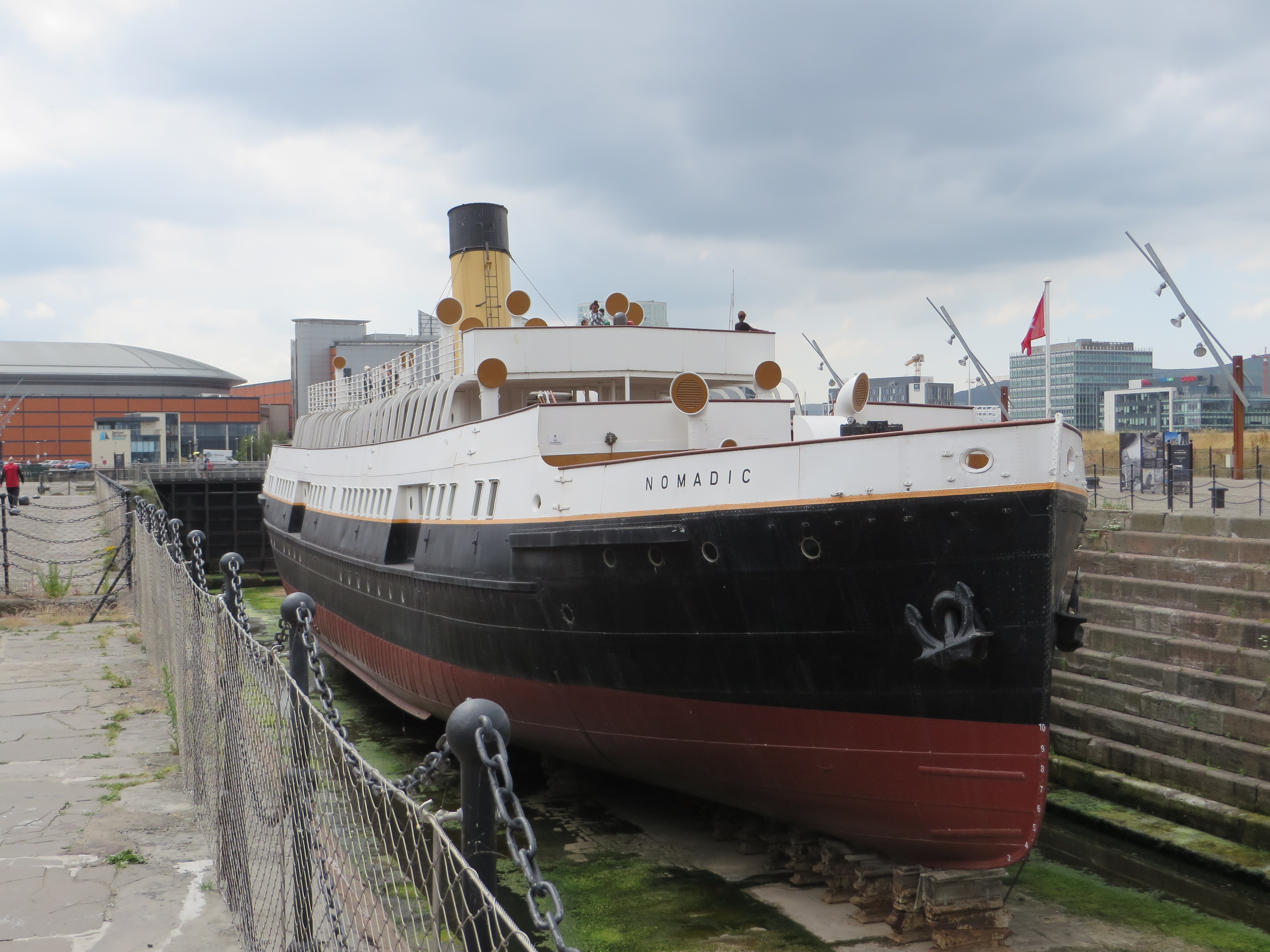
    Fortunately for the White Star Line, Titanic’s designers had thought of this. To get passengers from Cherbourg on board the Titanic and Olympic, what was needed was a smaller ship which could ferry passengers from shore to ship – a tender. To this end, Harland & Wolff designed two further ships, the SS Nomadic and the SS Traffic.

    Why two ships? While it is true that one ship could have been designed for the purpose, one must remember the strict class divisions of the time. On Titanic herself, first, second and third class passengers were strictly separated, to the point it would be extremely difficult for a first class passenger to even see a third class passenger. There were separate dining rooms, promenade decks, bathrooms, gangways, and much else separate on board. It would thus not be appropriate to have first and second class passengers share a tender with large numbers of third class passengers.

    SS Traffic was the third class tender. She was slower, far less luxurious and much less elegant than Nomadic. Sadly, she does not survive, but Nomadic, the first and second class tender (though she did have a small third class area), does, and is now back where she was built, in Belfast, a stone’s throw from the Harland & Wolff shipyard, after a long, varied and interesting history.

    Nomadic, as mentioned earlier, was built as a tender for the Olympic class ships, and did meet the Titanic off Cherbourg, on the 10th April 1912, though of course, they would never meet again. She continued as a tender for the White Star Line, until World War One, when she was used to ferry US troops into France. Following the war, she went back into service with the White Star Line as a tender, continuing to serve great ocean liners.

    In 1933, a deep water berth was opened in Cherbourg, vastly reducing the importance of the tenders. However, in 1934 Nomadic was bought by Societe Cherbourgoise de Remorquage et de Sauvetage (SCRS), or, in English, the Cherbourg Towing and Rescue Company, and continued to serve ocean liners from time to time. She was renamed Ingenieur Minard. Also in 1934, the White Star Line merged with its nearest competitor, the Cunard Line, to form the Cunard – White Star Line, due to financial difficulties as a result of the Great Depression. Duly, Nomadic served ships of this line too, including the Queen Mary, among many other liners.

    During 1940, as the Battle of France raged on, the British Army struggled to escape from the German advance. This culminated in the heroic evacuation from Dunkirk, immortalised in the recent film of the same name, where the vast majority of the British Expeditionary Force (BEF) was brought home, unfortunately minus most of its heavy equipment. This was not quite the end of the story for the British in France, however.

    The German advance had split the Allied armies in 2, with some penned in against the sea (mainly BEF, with some French units), North of the German advance which were evacuated at Dunkirk. To the South, there was the bulk of the French army, and a handful of British troops. These troops now had to escape, and fled west, towards ports still in French hands, such as Cherbourg, and Nomadic was on hand to evacuate troops and other persons fleeing France. She was then requisitioned by the British Government and spent the rest of the war as a troop ship.

    Following the war, Nomadic was kept busy helping to repair the facilities at Cherbourg, until 1952.When the repairs were complete, she also served the Queen Mary and Queen Elizabeth when they were unable to berth there, but was largely redundant due to the deep water berth. This went on until 1968.

    She then went through a few changes of ownership, before opening as a restaurant on the river Seine in Paris, with many changes of layout for various ventures. In 1999, new safety regulations required annual inspections of the hull in dry dock, so Nomadic closed as a restaurant. In 2002 she was moved to Le Havre, and in 2006 she finally returned to Belfast, where she was restored.

    Which brings us to today. Nomadic is now the only surviving ship of the White Star Line, and has been wonderfully restored, inside and out. The same pattern as Titanic’s first class dining room graces the floor of the first class area. This floor is actually linoleum, not a cost cutting exercise, but in fact what was used when Nomadic was built. Most of the on board fittings were made by the same manufacturer, and, thanks to surviving records and moulds, could be recreated in exact detail. For example, Harland & Wolff still had the original moulds for the portholes, and new ones were cast for the restoration.

    The interior of Nomadic was designed to give passengers a taste of the luxury that they would enjoy on board Titanic or Olympic. Thus the carving is incredibly intricate and even the toilets have decorative woodwork. Second class, as one might expect, is somewhat less decorative, and the small third class area is very spartan indeed. This too gives something of a feel of the Titanic.

    The only fly in the ointment is that the boilers and steam engines were removed in the 1970s, leaving a large empty space in the middle. Now, you can watch a video of how it all worked, but it is a shame you can’t see all the various parts as they would have been. Incidentally, this is why Nomadic is no longer seaworthy, and had to be brought to Belfast by barge – she is not balanced without all the propulsion equipment, and besides, her steering gear is steam operated.

    I could go on, but this would rather spoil it. She must be seen first-hand to be properly appreciated, and, helpfully, admission to Nomadic is included in the ticket for the Titanic Experience in Belfast. If you’re ever in that neck of the woods, or are particularly interested in Titanic, do consider giving her a visit.

    With that, I shall wish you an excellent day.

    July 10, 2018

  • Persistence, Murphy’s Law, and the Importance Thereof – Toyota at Le Mans 2012 – 18

    The year is 2012, the month January. While punters on the internet speculate as to the likelihood of the world ending sometime in December, and London readies herself for the Olympics, things are not looking good at Peugeot, the French car manufacturer.

    Following numerous profit warnings, PSA Peugeot Citroen Chief Executive Philippe Varin announces that the car maker is to save €800 million, and cut 6000 jobs. Worst of all, at least for car fans, Peugeot announces that they are pulling out of the greatest car race in the world – the 24 Hours of Le Mans. The fast, diesel powered Le Mans Prototypes Peugeot had spent years developing and perfecting, even winning with in 2009, will no longer compete.

    Le Mans is split into four categories. Two are for cars built specifically for endurance racing – LMP1 (Le Mans Prototype 1) and LMP2, with LMP1 cars being faster. The other two are for GT cars, based on fast road cars like Ferraris or Porsches – GTE Pro, for teams with professional drivers, and GTE Am, for teams with a mixture of professional and amateur drivers.

    Into this vanguard steps Toyota. Toyota, in 2012, had not competed at Le Mans for 13 years, and even then they had come second. This entry was all the more surprising given that the world financial situation, and the great expense (several tens of millions of euros) required to build a competitive LMP1. That’s right, they decided to plump for the most expensive category, and against the extremely experienced Audi team.

    Toyota’s first car, the TSO30, was a reasonably competitive machine. It had a 3.4 litre V8 engine and a a hybrid system that used supercapacitors to recover energy during braking. At the 2012 24 hours of Le Mans, the No. 7 TSO30 led the race briefly, before crashing into another car and retiring from the race. The No. 8 Toyota was not quite as successful, being clipped by a GTE Am car (driven by an amateur driver) resulting in both cars crashing.

    Two TSO30s were again entered for the 2013 24 Hours of Le Mans, and this time they did rather better. The TSO30, though slower than the Audi R18s in the dry, was quicker in the wet, and lady luck decided to shine (or rather rain) on Toyota that night, and then again in the final hour. Not only had Toyota finished, they had also come 2nd and 4th in the race, quite the achievement in their second year.

    However, this would be the end of the TSO30, because of the one constant in endurance racing – rule changes. Minor rule changes (increasing minimum weight of LMP1 cars by a small amount) had meant that the TSO30s in 2013 were not the same as those in 2012. In that year, the rules had been changed, to start in 2014. This had led to the development of a new Toyota – the TSO40, which first competed at the 2013 24 hours of Le Mans.

    The TSO40 was an aerodynamic improvement on her predecessor, but used the same engine, albeit with a slightly larger displacement. Modifications to the engine meant it now kicked out a touch over 500 hp, sent to the rear wheels, but it could also send electrical power to the front wheels, making it 4 wheel drive.

    However, now Toyota had more competition. Porsche, who had competed with GT cars (their 911s) in 2013, had decided to build a hybrid LMP1 car of their own. This eventually appeared as the Porsche 919 Hybrid, a car that had a small 4 cylinder petrol engine, but a very powerful battery hybrid system, a potent mixture that we’ll come back to later.

    However, at the 2014 24 Hours of Le Mans, the formidable new Porsche was pipped to the post by the new Toyota for pole position, with the No.7 on pole and the No.8 in third. Things were looking up for Toyota, when one of the TSO40s, the No. 8, managed to aquaplane into a barrier in the rain, and though she recovered, she was now out of the running for the lead, and would go on to finish 3rd.

    But this is not unusual at Le Mans, hence why teams bring 2 or even 3 cars, and, despite some early battling with Porsche, the No. 7 led for several hours. It was at this point that Lady luck, who had shone before on Toyota, decided to change her mind. An electrical fault burned out part of the engine control, leading to the car rolling to a stop and being retired. Needless to say, this was a great embarrassment for Toyota. It would not be the last.

    2015 was an interesting year for the LMP1 class. Not only were Audi, Toyota and Porsche coming back, a new entrant had also come along, with a radically different idea of how to win, and they also hailed from the land of the rising sun – Nissan. Nissan’s new entry was the GT-R LM Nismo, also a hybrid car, but this time with the engine driving the front wheels. This in theory would give more grip in the rain, which might just tip the balance. Unfortunately for Nissan, 2015’s race was very dry, apart from a small oil spill from a Porsche GT car. This would not have mattered in any case since the Nissan proved hideously unreliable, the cars spending a very long time in the garage and only one out of 3 actually finishing, but not covering enough distance to be classified.

    I tell you this side story to illustrate the difficulty of Le Mans, and of motorsport at this level. Nissan were not some poorly funded privateer team of amateurs, they had invested enormous amounts of engineering time and money into their effort, and yet still failed spectacularly. This just goes to show that Murphy’s law is very much in play, as it was with Toyota’s failed No.7 car the previous year. If it can go wrong, it has 24 hours of hard racing to go wrong.

    2015 would also not be a happy year for Toyota. Both Audi and Porsche had redoubled their efforts, both bringing 3 cars to the competition, and their pace had increased significantly. It was not that Toyota had stood still – the TSO40 had been tweaked and fettled, with newer aerodynamics being the key change – the competition had simply advanced further. So it would prove, with Toyota simply not being quick enough to catch the front runners. Their best effort managed 6th, with the other TSO40 managing only 8th.

    This did not deter them, however. In the works was a newer, quicker Toyota, the TSO50, to be ready for 2016. Again a hybrid, this car had a radically different biturbo V6 engine, backed up by a lithium ion battery system. I should say, has, rather than had, because this car is still in use by Toyota (more on this later).

    At the 2016 24 hours of Le Mans, the 2 Toyotas, the No.6 and No.5, qualified rather better, in 3rd and 4th respectively, behind the 2 Porsche 919 Hybrids. However, in the race, the Toyotas managed to do better, with one Toyota, the No.5, thrashing out a lead of over a minute on the best Porsche, the No.2. At this point, with just a few minutes left of the 24 hour race, surely, Toyota would finally win, only the second Japanese manufacturer ever to do so. A magnificent victory for a marque that had stepped in to save a dying category from an ailing French stalwart,  an engineering giant, truly, a well deserved triumph…

    Murphy’s Law struck once again – the leading Toyota began to experience a lack of power, due to an electrical fault. It was not necessarily fatal – if the No.5 could just hold off the Porsche for 3 more laps, they could still win. It was not to be. The Porsche caught the sick Toyota rapidly, with the TSO50 finally coming to a complete stand on the last lap of the race. If the experience so far had been unhappy for Toyota, this was the ultimate heartbreak. So close, and yet, so far.

    But of course, Toyota were undeterred by such an experience, and came back for 2017, this time with 3 cars, the Numbers 7, 8 and 9.  Audi, having already won several Le Mans races, decided to leave to concentrate on Formula E, no doubt put off by the enormous cost of LMP1. Porsche announced that this would be their last Le Mans with the 919 Hybrid, again to concentrate on Formula E. They brought only 2 cars, not the previous 3, and there was an air of legacy surrounding the Porsche garages that year.

    In qualifying, it was a Toyota 1, 2 and 5, with the Porsches stuck in between. Everything was looking great for Toyota, with a win surely this year guaranteed, and a strong start to the race. This year, an interesting spanner was thrown into the works – both a Porsche and a Toyota had hybrid system problems, necessitating a lengthy stop in the garages. Here we see another factor – the human factor. Porsche’s hybrid system could be changed merely by taking off the nose of the car, whereas the Toyota system required deconstructing parts of the cockpit, making it much more difficult to change and prolonging the stop.

    Suffice to say, the No. 8 Toyota was now out of the running for the win. But this was okay, because Toyota had brought 3 cars to the race, and they still had 2 out on the track in competitive positions, which could catch up to the lead. Toyota’s drivers were to have a night of hard driving, but they would be rewarded with victory the following afternoon.

    Or so they thought. It was at this point that Lady Luck turned from negligent to downright cruel. The No. 7 Toyota, in first place, suffered a clutch failure, leaving her only on battery power. This would not necessarily be the end for her, if she could make it back to the pits for repairs. Unfortunately, the track at Le Mans, the Circuit de la Sarthe, is over 8 miles long, and the poor TSO50 could not quite make it past the white pit lane line, from where the team could have jacked her up and brought her back in.

    But again, this is why Toyota had brought 3 cars. The final remaining competitive Toyota, the No. 9, could still potentially win the race, despite having qualified 5th. Toyota were very shortly to be denied a third time that night, with the No. 9 suffering a collision with an LMP2 car and a puncture. The driver of No.9 at the time, understandably frustrated, went too fast through a gravel trap, making the puncture worse, to the point where the gearbox was damaged. No.9 came to an embarrassing halt, Toyota’s dreams having been halted in less than an hour. Porsche went on to take another victory.

    As 2018 dawned,  Toyota were now the only manufacturer team in LMP1. The only competition came from much poorer Privateer teams like Rebellion and SMP racing, and so there was no question as to who would be fastest. At Le Mans this year, they brought just 2 cars, but by this time, the bugs had been ironed out.

    2018’s Le Mans 24 hour was a much more boring, but ultimately happy, experience, for Toyota, with the No.7 and No.8 Toyotas running a near-flawless race, finishing second and first respectively. At the 7th time of asking, Toyota were finally victorious.

    So why did I share this long, overcomplicated story with you? Let this serve as an example to the world – no matter how important, well funded or experienced you are, Murphy’s law can always strike, and that, despite this, one must keep on trying. One must keep trying because ultimately, the shame of not quite achieving the goal would far outweigh the struggle of coming back for another go.

    But there we are. With that, I shall wish you an excellent day.

    June 27, 2018

  • The Logistical Nightmare – The Luftwaffe of WW2

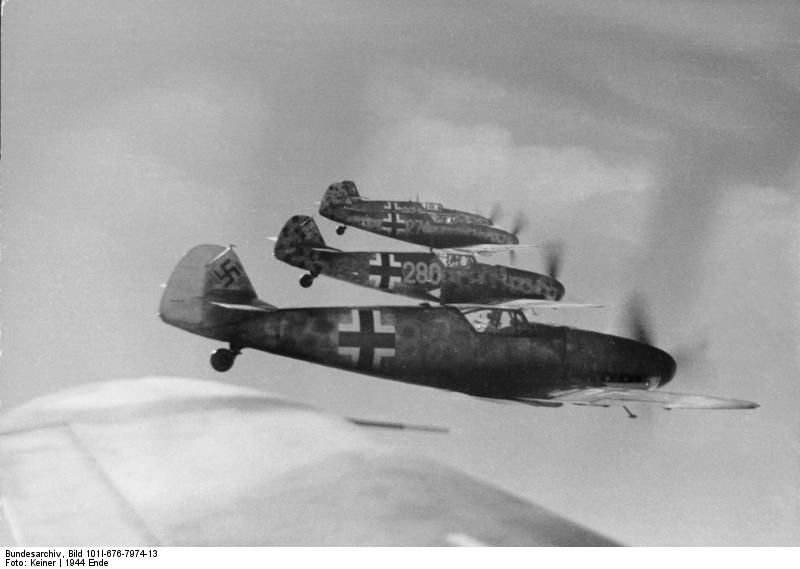
    Flugzeuge Messerschmitt Me 109

    During World War 2, the Luftwaffe (Germany’s Air Force) fielded some of the most advanced warplanes of the era, and some of the world’s best pilots. This great force, however, found itself smashed, unable to do a thing while other air forces pounded the third reich. How could both things be true simultaneously? The simple answer is: logistics.

    If you are going to field an air force, one must keep it supplied. Combat aircraft require fuel, ammunition, spare parts, pilots, crew, and a whole host of support staff. These aircraft must be protected while they are on the ground, and the personnel housed, fed, watered and entertained. Furthermore, the vehicles and personnel you need to supply your air force must be maintained, so you see this is a massive undertaking.

    One way to make this easier is to standardise. If you think that various aeroplanes need various parts, and that there might be different factories producing these parts, and that you need to get the correct parts to the correct aeroplanes if you are to get them in the air, you begin to see the importance of standard parts. This problem extends to ammunition, in a similar way, so standardisation is a key way to make your logistics easier.

    An example of great standardisation in this era is the US military. US armed forces on every front used identical .50 in calibre machine gun bullets, and most of their aircraft used only .50 in calibre machine guns. The guns themselves were the same, using the same ammunition. This meant many factories could produce identical bullets and guns, which could be sent to every front, no further organisation needed.

    As another example, consider the M4 Sherman tank, the one everyone loves to hate. Shermans were used on every front of the war, using (mainly) the same engines, the same guns, the same parts, etc. It was simply designed to operate on every front. Thus the US found it easy to arm her troops with a fairly competent tank almost wherever they went.

    By contrast, the Luftwaffe was very bad at standardisation. Their most produced aircraft, which, incidentally, is the most produced fighter aircraft in history, the Messerschmitt Bf109, was an absolute nightmare. Though the aircraft was effective, most Bf109s were fitted with a mixed armament, with some machine guns and some cannon. Frustratingly, the Luftwaffe switched from one type of 20 mm cannon to another during the war, and some aircraft kept the older type, compounding the problems.

    Furthermore, some later Bf109s had a 30 mm cannon, to give it more punch against heavy bombers. Unfortunately, this was not adopted on all Bf109s, making the supply situation more complicated still. Other problems abounded – numerous different variants of the aircraft were produced, and then field modification kits were introduced, adding extra cannons to some aircraft, tropical filters to others, and so on and so forth. This meant that there was, for most of the war, no standard version of the Bf109. A later version, the Bf109 K4, was intended to standardise production, but just introduced yet another version to worry about.

    Messerschmitt’s fighter was by no means an isolated case. Germany’s main bomber, the Heinkel 111, was fitted, during its life, with numerous types and calibres of machine gun, and cannons varying from 15 to 75 mm.

    Quite apart from anything that might happen in combat, these standardisation issues would hamstring the Luftwaffe throughout the war. They would also place great strain on Germany’s relatively small industries and transport networks. However, it does leave the question as to why this was the case, if the benefits of standardisation were so obvious?

    The Luftwaffe was obsessed, perhaps understandably, with the combat situation, and technical officers were not well regarded, not even being allowed to wear their own insignia. The multitude of cannons and machine guns only existed to incrementally upgrade the combat effectiveness of their aircraft, without thinking about the supply chain issues.

    Amongst the Allied nations, the supply chain was considered throughout the process of introducing equipment. Despite the obvious combat advantage of the 20 mm cannon over the 0.5 in machine gun, the US armed forces stuck with it, because of the disruption to the supply chain. The British even stuck with the largely obsolete Browning .303 calibre machine gun for years, because British factories were already churning out the ammunition for them.

    You might have heard of Germany’s first jet fighter, one of the most important aircraft ever produced, the Messerschmitt Me262. This was much quicker than the Bf109, and any of the opposing Allied fighters, but again, it shared virtually no components with the previous aircraft, being a jet after all. Since Germany had now lost precious metal mines in Eastern Europe, the engines were made from inferior materials, and would need to be removed and overhauled after 10 hours of running. Many lasted far less time.

    This necessitated both the supply chain headache of producing and overhauling the engines, and the transport issue of engines constantly going back and forth. Another logistical nightmare.

    Even more bizarrely, the Germans also used a rocket-propelled interceptor, the Me163, which used 2 different kinds of fuel (the mixture was hypergolic; that is, when the fuels were mixed, they spontaneously combusted, propelling the aircraft). Undoubtedly a technical marvel, and the fastest aircraft of the war, the Me 163 not only made the supply chain awkward, it also made it extremely dangerous.

    Those last 2 aircraft, the Me 163 and Me 262, deserve articles of their own, and indeed, both have had entire books written on them. Perhaps another edition of “Perfect is the Enemy of Good Enough”? Watch this space…

    Of course, there were other factors that contributed to the failure of the Luftwaffe in World War 2, and a proper appraisal of them all would result in a very long article indeed. I imagine you would not want to trawl through such an article, and I certainly do not have the time to write one, at least not without prejudicing everything else.

    But there we are…

    June 25, 2018

  • 5 Things You Never Noticed About British Trains

    Trains are enjoying something of a resurgence in recent years, with passenger numbers up. Particularly if you’re young and can get a railcard, it is a truly excellent way to travel, especially outside peak hours when the trains are quieter. Smoother and faster than a car, and with no parking, tax, MoT, etc. to worry about, this is the way to see Britain.

    While you’re out and about on trains this summer, here’s some things you might not have noticed:

    The front of the train is yellow
    No really, this is true on (almost all) British trains, regardless of operator. The rule is that a certain area of the front must be painted yellow, because this makes it more visible and thus safer (a bit like a hi-vis jacket). This was first introduced in the 1960s, and has since stuck. Newer rules mean that if you have sufficiently bright headlights, you no longer need the yellow front, so some newer trains (notably those for Crossrail) are painted different colours. Tube trains too are different, but they’re not on Network Rail metals.

    The number(s?)
    Yes, you have probably noticed that the train has a number on the front, but you probably didn’t notice what it means. Let’s take an example, 170114.

    The first 3 digits, 170, tell you what sort of train, or “class” it is. This is a class 170.
    Some types have 2 digit class numbers, but most trains these days have 3.

    The last 3 digits are an individual identifier.
    In the old days, 114 might suggest the 114th train of that type built, but these days the first digit is more like a “subclass” number. With many different operators, there are minor differences between members of the same class, hence this addition.
    This number tells us that it’s the 14th Class 170/1.

    The individual carriages also have numbers, but these are not nearly so organised.

    The doors are a different colour to the rest of the train
    This one applies to all service trains in the UK, regardless of company (even on Crossrail). This is not so much for safety, though it might help. The real reason is that it helps visually-impaired people to find the doors and board the train, though of course it doesn’t help blind people.
    The rule has been around since the early 2000s, and it doesn’t look like it’s going to change.

    (Numbers again) The fastest trains (mostly) do 125 mph
    Apart from High Speed 1 in the South East, the fast trains all do 125 mph, or 200 km/h. There are good reasons for this:

    As the resistance to motion increases exponentially with speed, you have to have a lot more power to go faster
    The track maintenance cost would be much higher if you went faster, unless you use different track
    A lot of British trains are capable of 140 mph, but it is difficult to read signals at that speed, so without in-cab signalling, 125 mph is a safe limit

    Trains Also Drive on the Left (except when they don’t)
    In the UK, we use left hand running traditionally. This is much easier to achieve with a train than a car, since you’re literally on rails.

    That said, many lines are now bi-directionally signalled, so trains can in theory go in either direction, though in practice left hand running still dominates.
    The other thing to notice is that there are fast and slow lines on many routes, so slow freight trains and fast passenger trains can be separated. Trouble is, in some places the lines are separated by direction, and in others by speed, so it can appear as though trains are running on the right.

    In fact, if you look at the National Rail (formerly British Rail) logo, you’ll notice that the top forms an arrow pointing to the right, indicating left hand running:

    https___upload.wikimedia.org_wikipedia_en_thumb_3_31_National_Rail_logo.svg_1280px-National_Rail_logo.svg

    So there we are, 5 things to notice next time you’re bored waiting for a train, or want to sound intelligent and/or boring. Good day.

    June 23, 2018

  • Together in (sort of) Electric Dreams – A Critique of Government Rail Policy

    In recent times, the railways seem to have been in the public eye more than ever. In particular, the timetable problems of Northern and Thameslink have seen the railway taking a great deal of (well deserved) flak. This is not an article about the debacle on those operators – a topic covered to death by many, though I will write on it if you lucky people ask for it.

    Instead, this article is about the less recent (but still very relevant) issue of railway electrification. You might remember a few months back that the electrification of both the Midland Main Line and Transpennine routes had been cancelled. I wish I could tell you that these decisions have been overturned, but they have not.

    Why were these decisions made? The simple answer is lack of funds, but as always on the railways there is more to it than that. Funds are (or were) in short supply due to the spectacular cock-up (apologies for the language, but there really is no other word for it) that was made of the Great Western Electrification, due to the ineptitude of both the Department for Transport (DfT) and Network Rail (NR).

    The DfT dithered with decision making, and decided to order trains before it really knew what the route was going to look like. It then rushed NR into starting work before NR had even decided what materials it was going to need. This is not to let NR off the hook though, because they seemed unable to deliver anything when they said they would, and managed to procure an installation train that cut through the cables NR had just buried. Suffice to say, this scheme is incomplete, behind schedule and several billion pounds over budget.

    So if the electrification is off, what is happening instead? Well, keen to avoid looking anti-rail, the government has come up with a solution, or rather, they have seized on an idea. And that idea is the bi-mode train, which can both take electricity from overhead lines and run on a diesel engine. In theory at least, this means that the whole line need not be electrified.

    There are some problems in practice. Firstly, this makes the train more mechanically complicated and thus more expensive to maintain, simultaneously reducing the margin for error. On the first day of the new bi-mode trains on the Great Western route, for example, a new class 800  train was unable to take electricity because somebody in the depot had left the pantograph (the bit of the train that connects to the overhead line) isolated.

    Secondly, this makes both modes of operation less efficient. When running on electric power, the train has to lug around several tonnes of fuel, engines and generator equipment which serves no purpose whatsoever. When running on diesel power, the train must lug around the pantograph and all the associated (and unnecessary) electrical equipment. The result of this is that energy consumption is greater than the equivalent electric or diesel train on the respective modes.

    Thirdly, this makes the train heavier. Weight is not generally an issue for the train, and in some circumstances extra weight is a good idea, but it does put more wear on the track, which increases the maintenance cost. In other words, extra weight gives Network Rail (who already have enough money issues) further financial worries. In the long run, this is likely to become more of a factor, but for now is largely being ignored.

    In addition, since the diesel engines have only limited power, and have to lug around a lot of electrical equipment, there have been performance issues. Class 800 trains on the Great Western Railway struggle to reach their intended top speed of 125 mph on diesel power and so the timetables have not been greatly accelerated. For balance, I should mention that the class 800 trains were not intended to be bi-mode, and the diesel engines were shoehorned in when it became clear electrification was not going to be complete. The class 802s, coming this summer, have more powerful diesel engines, and should do better.

    Notice that at no point have I mentioned the Train Operator, the company who runs the trains. That is because in this case at least, they are an irrelevance. The class 800 trains, dubbed “Intercity Express Trains” (IETs) by the operator Great Western Railway, were not ordered by Great Western. They were ordered by the DfT and forced on the operator, who do not even have control over the maintenance, which is handled by the manufacturer Hitachi.
    I am afraid in this article I will not be going on to cover the nationalisation debate, that is most definitely a can of worms for another day. It only remains for me to announce that this article terminates here, to remind you to change here, and advise you to keep all your personal belongings with you when you leave.


    June 14, 2018

Previous Page Next Page

Blog at WordPress.com.

  • About
  • Home
  • Contact
 

Loading Comments...
 

    • Subscribe Subscribed
      • PECULIARLY PETE
      • Already have a WordPress.com account? Log in now.
      • PECULIARLY PETE
      • Subscribe Subscribed
      • Sign up
      • Log in
      • Report this content
      • View site in Reader
      • Manage subscriptions
      • Collapse this bar